Netflix walks away from WBD deal as Paramount’s sweetened $31-per-share bid wins out
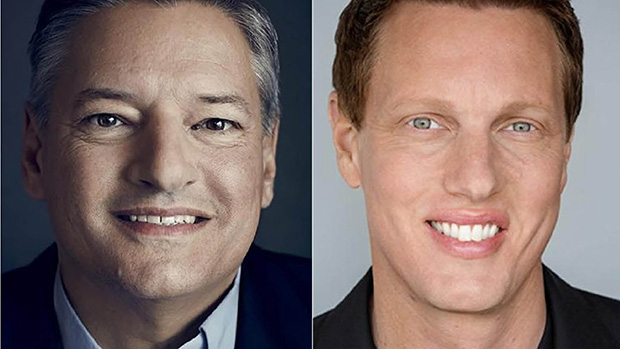
Ted Sarandos (left) and David Ellison
Netflix has made the decision to walk away from its Warner Bros Discovery (WBD) deal, calling the transaction a “nice to have” at the right price, not a “must have” at any price.
The streaming giant on Thursday evening made the blockbuster announcement that it was declining to raise its US$27.75-per-share offer for WBD’s studio and streaming businesses. The decision to bow out came after it was notified by WBD’s board that Paramount’s US$31-per-share bid for the entire company had been deemed superior.
“The transaction we negotiated would have created shareholder value with a clear path to regulatory approval,” said Netflix co-CEOs Ted Sarandos and Greg Peters in a statement released 90 minutes after WBD’s declaration.
“However, we’ve always been disciplined, and at the price required to match Paramount Skydance’s latest offer, the deal is no longer financially attractive, so we are declining to match the Paramount Skydance bid.”
The co-CEOs thanked WBD leadership, including president and CEO David Zaslav and chief financial officer Gunnar Wiedenfels, for running what they characterised as a “fair and rigorous process.”
The Netflix heads reiterated their belief that a tie-up with WBD would have “strengthened the entertainment industry and created more production jobs in the US.”
Netflix’s decision to bow out paves the way for Paramount to acquire WBD in its entirety, assuming the David Ellison-led company’s deal can pass muster with regulators in the US and Europe.
While Netflix said it was walking away for financial reasons, there are likely several other factors that influenced its decision.
Primary among them is the political and media circus that has accompanied its regulatory approval efforts thus far. Earlier this month, Sarandos appeared before a US Senate committee for a hearing that veered wildly off topic, with the co-CEO facing accusations from some senators that it is spreading a “transgender ideology” and commissioning content that is “overwhelmingly woke.”
There has also been the persistent concern that David Ellison and his billionaire father Larry Ellison have an inside track with the Trump administration. While US president Donald Trump had initially heaped praise on Sarandos in December, his tone towards Netflix changed this week with a seemingly furious Truth Social post calling on the streamer to “fire” board member Susan Rice, a former US policy advisor to Joe Biden, or “pay the consequences.” Sarandos visited the White House on Thursday, though there is no indication that his meeting with Trump had any bearing on the way events unfolded.
Another likely factor in Netflix’s decision to walk away is the stock price. Since its interest in WBD was first revealed in October, Netflix share price dropped more than 30%, a clear indication that investors were unclear as to why Netflix, which has never pursued an acquisition anywhere close to this scale before, was breaking from its “builder” ethos. After Netflix backed out of the running on Thursday, the stock climbed around 9% in after-hours trading.
With WBD’s determination that Paramount’s deal was superior, Netflix would have had four business days to raise its offer. By declining to do so, it paves the way for WBD to terminate the US$82.7bn definitive agreement signed in early December.
Earlier in the week, Paramount made several revisions to its offer, including upping the overall price to $31 per share. It also put several other sweeteners into the deal, including promising a 25¢-per-share quarterly increase if the deal doesn’t close by September 30, 2026, agreeing to pay a US$7bn fee to WBD in the event the deal isn’t approved by regulators and covering a potential US$1.5bn debt refinancing cost. It also agreed to pay a US$2.8bn termination fee to Netflix.
After receiving the improved offer, WBD on Tuesday said it “could reasonably be expected” to lead to a superior deal and continued to engage with Paramount.
For David Ellison, the deal to clinch WBD comes after a breakneck two years in which he has acquired Paramount from former controlling shareholder Shari Redstone. The WBD acquisition, if approved, would see Paramount taking ownership of WBD’s studio businesses, HBO, HBO Max, WBD’s massive IP and content library, as well as linear networks and brands including Discovery, HGTV, Food Network, Magnolia, OWN, TBS, TNT Sports, news giant CNN and streamer Discovery+.
The eyes of the international content business will also turn to the scale of the lay-offs that will come from combining two media companies with largely overlapping functions. Paramount previously said it would make around US$6bn of cost cuts. However, Netflix, in its own calculations, said it believes Paramount will make around US$16bn in cuts after merging with WBD.
After WBD deemed Paramount’s offer superior, Ellison said: “We are pleased WBD’s Board has unanimously affirmed the superior value of our offer, which delivers to WBD shareholders superior value, certainty and speed to closing.”
For its part, Netflix said it would forge ahead with its existing strategy, while growing content spending in the year ahead. “Netflix’s business is healthy, strong and growing organically, powered by our slate and best-in-class streaming service. This year, we’ll invest approximately $20bn in quality films and series and will expand our entertainment offering,” said Sarandos and Peters. “We will continue to do what we’ve done for more than 20 years as a public company: delight our members, profitably grow our business, and drive long-term shareholder value.”