Show of the Week – Hitler’s DNA: Blueprint of a Dictator – ITV Studios
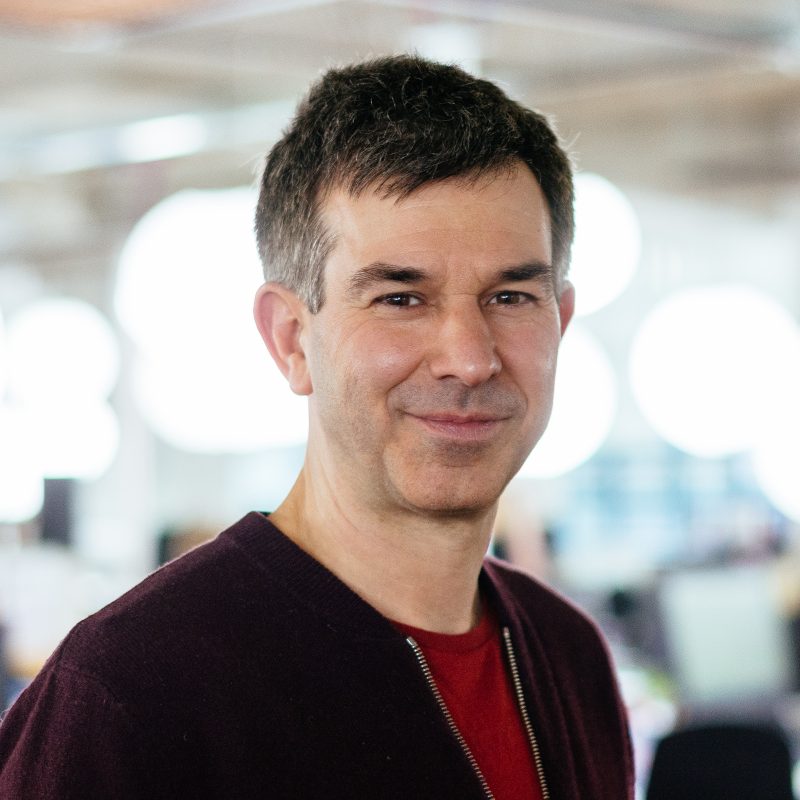
Dan Chambers, co-founder and creative director at Blink Films, explains how ground-breaking documentary Hitler’s DNA: Blueprint of a Dictator was made and why getting the balance between scientific depth and accessibility was so important.
Show: Hitler’s DNA: Blueprint of a Dictator
Run time: 2×60’
Producer: Blink Films for Channel 4 (UK) and History (US)
Dan Chambers,
Blink Films
What first drew you to the idea of analysing Hitler’s DNA, and how did this extraordinary project come about?
About seven years ago, we realised that genetics was at a level where it was possible to reveal a huge amount of information about someone from their genome. The question was who to apply it to. The obvious answer was the most evil, most enigmatic figure of the 20th century, Adolf Hitler. And so began the process of hunting for his DNA. We had lots of false starts. We thought we might be able to find his DNA from his dried saliva under a stamp that he licked. But that led nowhere. Then we heard about a swatch of blood-stained material that had been cut from the sofa where he shot himself. We traced it to a museum in Gettysburg and the owner said he was happy for us to take a sample from it. But would there be human DNA on it? And if yes, would it be possible to establish if it was Hitler’s?
This is the first time Hitler’s DNA has ever been sequenced. How did you verify that the sample was authentic and what did that process involve?
It was exciting to find a sample of DNA that could be Hitler’s, but the only way we’d know if was actually his was by finding a relative. And that’s easier said than done. Hitler’s relatives must be the hardest people in the world to get to agree to give a cheek swab. Eventually, we found a Belgian journalist, Jean-Paul Mulders, who 10 years before had found a Hitler relative who had given a DNA sample for another test. Fortunately, there was some left which he had kept in a safe, and he was willing to let a lab use a sample. There was an exact match. For the first time in history, we had Adolf Hitler’s DNA. It was a ‘pinch me’ moment. Brilliant geneticist Professor Turi King joined the project, re-did all the tests to an even higher standard of evidence and confirmed that the initial result was correct.
When the first results came through, revealing such unexpected traits, what was your immediate reaction as a storyteller and producer?
Turi King approached various labs requesting them to produce a full genome from the verified sample. But time and again, they turned us down, saying that they didn’t want any association with Adolf Hitler. Eventually, she found a not-for-profit lab in Utah that was willing to do the work. That was a good day.
The evidence suggesting Kallmann syndrome is compelling. How did you balance scientific integrity with the demands of television storytelling?
We were led by the science. The question was what is Kallmann syndrome? How does it affect someone at puberty? What are the physical consequences? And what psychological impact would it have had on Adolf Hitler? We were keen to understand how it might have shaped his outlook on the world. Professor Brett Kahr of the Tavistock clinic was able to give an insight that went beyond the prosaic, positing that it would likely have resulted in a sense of humiliation, but also “murderous rage.”
The series tackles sensitive territory, from mental health to genetics and morality. How did you strike the right editorial balance?
It’s important to always be as accurate as possible and not overstate the findings. The most controversial findings were those of the polygenic scores. These indicate a combination of genetic variants that are associated with predispositions to particular conditions. They revealed that Hitler was in the top 1% for each of autism, schizophrenia and bipolar. We were at pains to be clear that none of these results is diagnostic, that environmental factors play a huge role in shaping an individual, and that no one with any of these conditions should read anything negative into them. Psychiatrist Dr Michael Fitzpatrick points out that most people with autism are “excessively moral.”
You worked with world-leading experts including Professor King and Sir Simon Baron-Cohen. How did they become involved in the project, and what convinced them to take part?
As soon as we found a match, we asked Professor King to join the team. It was wonderful working with a scientist of her calibre, and with such great infectious energy. She confirmed the results and steered the research, ensuring the world’s leading geneticists were involved in all the key areas of specialism. And once it was established that Hitler was in the top 1% for the polygenic risk score for autism, we approached world authority on autism Professor Simon Baron-Cohen from Trinity College, Cambridge. He was intrigued by the findings but stressed the role of environmental factors and the importance of avoiding any kind of genetic reductionism.
How do you think the series will resonate with international viewers? The story has already sparked huge global interest, reflecting ongoing fascination with Hitler’s psychology and legacy. Perhaps the appeal of Hitler’s DNA: Blueprint of a Dictator is that while so many previous films on Hitler go over the same old things, this series offers lots of new insights. And by bringing together scientists and historians, the new discoveries are thoughtfully assessed and put in context.
From a production and storytelling perspective, what were the biggest challenges in making this film?
Balancing scientific depth with accessibility was crucial. The findings are groundbreaking but often complex, covering genetics, physical medicine and psychiatry. We worked closely with experts to ensure accuracy without sensationalism, trying our best to present sensitive material responsibly.
Finally, what do you hope viewers around the world take away from Hitler’s DNA: Blueprint of a Dictator?
We hope people come away with new insights into both Hitler and the science behind the discoveries. It’s a chance to look at history through a different lens, using genetics to explore aspects of his life and behaviour that have long been debated, and more broadly, it shows a new way of doing profiles on figures from history.