Iyanu puts African animation on the global stage
By Karolina Kaminska 03/03/2026
Roye Okupe, creator of HBO Max and Cartoon Network’s Iyanu, produced by Lion Forge Entertainment, tells C21Kids how the animated fantasy series is raising worldwide recognition of animation that comes from Africa and how African animation could reach the heights of Japanese anime.
Iyanu was nominated for three NAACP Image Awards this year. Is the series’ success boosting global recognition for African storytelling in animation?
I believe it is and I say that with a lot of humility and gratitude. Getting three NAACP Image Award nominations was a blessing, but it’s also a signal: authentic African stories belong on the world stage, not as a ‘special category,’ but as premium content. What’s been most powerful for me is watching audiences from all over the world connect with it. The fact Iyanu is resonating globally tells me we’re moving into an era where African stories aren’t just being ‘included’ – they’re being celebrated.
With a second season and second feature film in the works, what other plans do you have for the Iyanu IP?
Our mindset is simple: if we keep making Iyanu the best it can possibly be, everything else will fall into place. Iyanu was always designed as a universe. There’s so much history, mythology and story runway in Yorubaland. We’ve already seen how a feature like Iyanu: The Age of Wonders lets us go deeper into the world in a fresh way. Going forward, the goal is to keep building the world through the best medium for each story, whether that’s more features, series etc.
How does Iyanu open the doors to your other projects, like Malika: Warrior Queen?
Iyanu is proof of concept. It shows buyers, partners and audiences that an African-inspired property, when done with respect for a global audience, can compete at the highest level.
But for me personally, it’s also bigger than business. I’ve spent over a decade building YouNeek Studios to tell stories inspired by African history, culture and mythology for a global audience. Hopefully as more and more people find out about and enjoy Iynau, they start to ask: ‘What else does Roye Okupe have in store?’ That naturally shines a light on projects like Malika: Warrior Queen. I can’t wait for people to see what we’re doing with this anime-inspired, or as we call it, Afro-Anime epic.
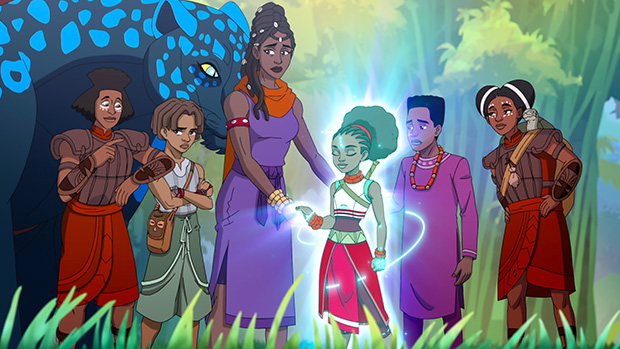
Iyanu has been nominated for three NAACP Image Awards
Are you seeing increased demand globally from buyers and viewers for animation that hails from Africa?
There’s definitely more openness now than there used to be, but I always add this: demand isn’t enough by itself. What moves the needle is when buyers see that the audience will show up and when the story is so specific and so emotionally accessible that it becomes universal. Iyanu has helped demonstrate that.
How can African animation move away from being a niche genre to an international creative movement, standing alongside the likes of Japanese anime?
We have to stop treating ‘African animation’ like it’s one genre. Anime isn’t one thing; it’s a movement with range: action, romance, comedy, horror, slice-of-life, kids, adult – everything. For African animation to stand alongside it, we have to build volume, variety and consistency, and we have to build businesses, pipelines and talent ecosystems that can sustain it. Creatively, the recipe is: be specific, be excellent and lead with emotion. The more specific we are culturally, the more universal the story becomes; because people don’t fall in love with geography, they fall in love with characters.
What are the biggest challenges facing animation rooted in African storytelling?
The first challenge is resources – animation is expensive and time-consuming. The other challenge is perception – people still carry outdated ideas about what Africa is and what African stories ‘should’ look like. That’s why it’s so important to keep showcasing Africa as a place of wonder, complexity, heroism and imagination.
What advice would you have for other African creators wanting to have their stories heard?
Start small, start now, keep going. Don’t wait for permission. Find your MVP – your minimum viable product – and put it out. If you want to make a movie, make a short. If you want to make a graphic novel, start with 10 pages. Build a body of work, build community, get feedback, get better and keep moving forward. Most importantly: run your own race. Patience, persistence, humility and hard work will take you places.