The hidden system behind global TV hits
By Taco Rijssemus 29/06/2026
Why do the UK and Netherlands consistently export global format hits, while larger markets such as Germany, France and Italy rarely produce successful formats of their own? Is it simply a matter of talent or luck, or does the answer lie in a deeper underlying ecosystem? Taco Rijssemus, partner at 3Rivers and former CEO of All3Media Germany and IDTV, is mapping the structural conditions behind international programme success through the new Creative Systems Research Lab, which will form the basis of a series of Creative Leadership Insights articles in partnership with C21.
The industry has a persistent habit: explaining success through talent or luck. The writer who had a brilliant idea. The producer with the right connections at the right moment. Taco Rijssemus no longer believes in that. “If you step back, you see clear patterns,” he says. “Some countries consistently produce exportable IP, others do not. That is not a coincidence; there is a system underneath it.”
To expose that system, 3Rivers launched the Creative Systems Research Lab. The Lab has now analysed 12 markets along eight dimensions, four of which are cultural, such as the tendency to avoid uncertainty or the space a culture affords to experimentation, and four of which are political-economic, such as market size, terms of trade and the degree of vertical integration in the sector. Together they form an explanatory model for who dominates the global formats market and why.
The ranking that explains everything
The findings are strikingly consistent. The UK accounts for approximately one third of global format exports. The US ranks second but is losing ground. The American market is 70 times larger than the Dutch, yet its export share of around 28% is only twice as large. The Netherlands, with barely 18 million inhabitants, holds a stable third position with around 10% of the global market share.
A notable underperformer is Germany. As Europe’s largest economy, the country primarily buys foreign formats and rarely creates exportable IP of its own. Rijssemus, who spent three years in Germany working for All3Media, attributes this mainly to three interconnected factors. “German culture scores high on uncertainty avoidance. Original format development is inherently risky; you never know whether something will become a hit. Countries that shy away from uncertainty tend to reach for proven formats to minimise risk,” he says.

On top of that, the dominant cost-plus model means that producers transfer all rights to the broadcaster, leaving them with little financial incentive to invest in original, internationally scalable development. Furthermore, the sheer size of the domestic market removes the structural pressure to export. A format that works in Germany generates sufficient revenue at home, unlike the Netherlands, for instance, where the market is simply too small to sustain a production business without international exploitation.
The Traitors as a lesson in systems
In the industry, creativity is often viewed as an individual quality – the ‘eureka moment’ of a single genius. Rijssemus, who as CEO of IDTV was closely involved in the global hit The Traitors, knows that reality is more complex. “The success of The Traitors was an organic group process. The original creator Marc Pos, Jasper Hoogendoorn, IDTV, RTL and various creatives continuously passed ideas to each other and refined them. It is not one person but the system and the context that determine whether an idea can flourish and scale internationally.”
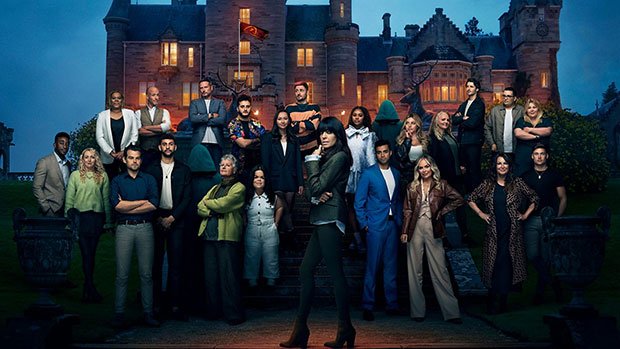
‘The success of The Traitors was an organic group process’
That context is now under serious pressure. The Research Lab identifies three interconnected forces threatening the format innovation ecosystem. They cannot be viewed in isolation. Together they will determine who is still capable of developing new global hits in 10 years’ time.
The rights paradox: streamers and consolidation as two sides of the same coin
The most acute threat is what Rijssemus calls the “rights asymmetry.” Streamers, historically focused on drama, are now moving aggressively into factual entertainment and formats. But they operate on a total buy-out model: the producer transfers all IP rights. “For small markets like Flanders, the Netherlands and Denmark, this is very threatening,” says Rijssemus, “because the profit has to come from international resale. Without those rights, the engine of reinvestment in new creativity disappears.”
In parallel, the production sector is consolidating rapidly, with companies increasingly falling into the hands of financial shareholders. The question is how much room that shareholder logic leaves for the risky investment in new format development that the industry needs. Streamer buy-outs and financially driven consolidation can thus operate as two sides of the same coin: IP rights shift systematically away from the creative core towards capital parties with a short-term horizon.
Whether large, consolidated players can compensate for this risk through their scale and infrastructure remains an open question.
Sir Peter Bazalgette, former chairman of ITV, drew the most far-reaching conclusion in his interview with the Lab: “The British creative ecosystem is almost dead because of the streamers.”
The creator economy: opportunity without a trading system
YouTube creators and content makers undeniably produce creative work and reach enormous audience segments. But most creator content lacks a tradeable IP model at its foundation. Rijssemus sees an important distinction here: “A company like Signal.Stream uses YouTube cleverly to test formats and build reach, but the real money is still made through the traditional format trading system.” The creator economy is therefore not a replacement for that system, but a testing instrument for it, provided you know how to bridge the gap.
AI: the rights question becomes existential
The rise of AI will continue to reshape the format ecosystem in the years ahead. “We are already seeing producers’ profit margins coming under pressure,” says Rijssemus. “Market power will concentrate further among those players who own IP and have their distribution in order.”
But the deeper consequence of AI strikes directly at the rights paradox: if AI generates content on the basis of existing IP, then the legal position of whoever owns that IP will determine who captures the value of the next generation of content. The three forces reinforce each other.
The Achilles heel: protecting IP rights
According to Rijssemus, the Achilles heel of the European and Dutch market lies in the fact policymakers are fixated on production quotas while neglecting the rights position of producers. The European Media Services Directive makes no mention of IP rights whatsoever, for example.
“In the Netherlands, there is a relatively healthy ecosystem thanks to voluntary industry agreements under which rights are usually shared,” he says. “IDTV, for instance, retained a share of the rights to The Traitors. But in the UK this is legally anchored through the Communications Act of 2003: public broadcasters must leave at least half the rights with the producer. This gives producers the financial space to reinvest in creativity.”
Rijssemus argues that lobby groups should push hard for similar legal protection against the buy-out practices of streamers. “A broadcaster can try to pull all the rights towards itself, but in doing so it kills original creativity.”
Strategy at a tipping point
Through the Research Lab, accessible via the 3Rivers website, the consultancy firm aims to help broadcasters and producers make the right strategic choices. “Broadcasters and producers are simultaneously facing four major strategic disruptions: streamers, consolidation, the creator economy and AI,” concludes Rijssemus. “In every ecosystem, these have a different effect. With that knowledge, we want to help media organisations make the right strategic choices now.”
The urgency is real. Format innovation is not a given, it is the result of systems built over decades. Those systems are fragile, and the windows to protect them are closing fast.
A partnership between C21 and 3Rivers, Creative Leadership Insights is a series of high-profile interviews in which Taco Rijssemus talks with leaders from the TV industry, drawing on an ongoing research programme conducted in collaboration with Utrecht University. The articles will also feed into the agenda of C21’s Content events.