
CONTENT EUROPE: With creator-led versions of classic TV formats such as Family Fortunes, Supermarket Sweep and Jeopardy! finding new audiences on YouTube, has a healthy new revenue stream for distributors emerged – or is it a short-term fix for an industry in flux?
Few examples better illustrate how the industry has fundamentally changed than UK YouTube collective The Sidemen’s two versions of Family Fortunes, published eight years apart.
The first, released in 2018, is a rough-and-ready bootleg with dodgy audio, while the second, released on YouTube a few months ago, is a glossy, professional remake that wouldn’t look wildly out of place on ITV (though certainly not in the same pre-watershed slot the Fremantle show once occupied, thanks to the group’s trademark bawdiness).
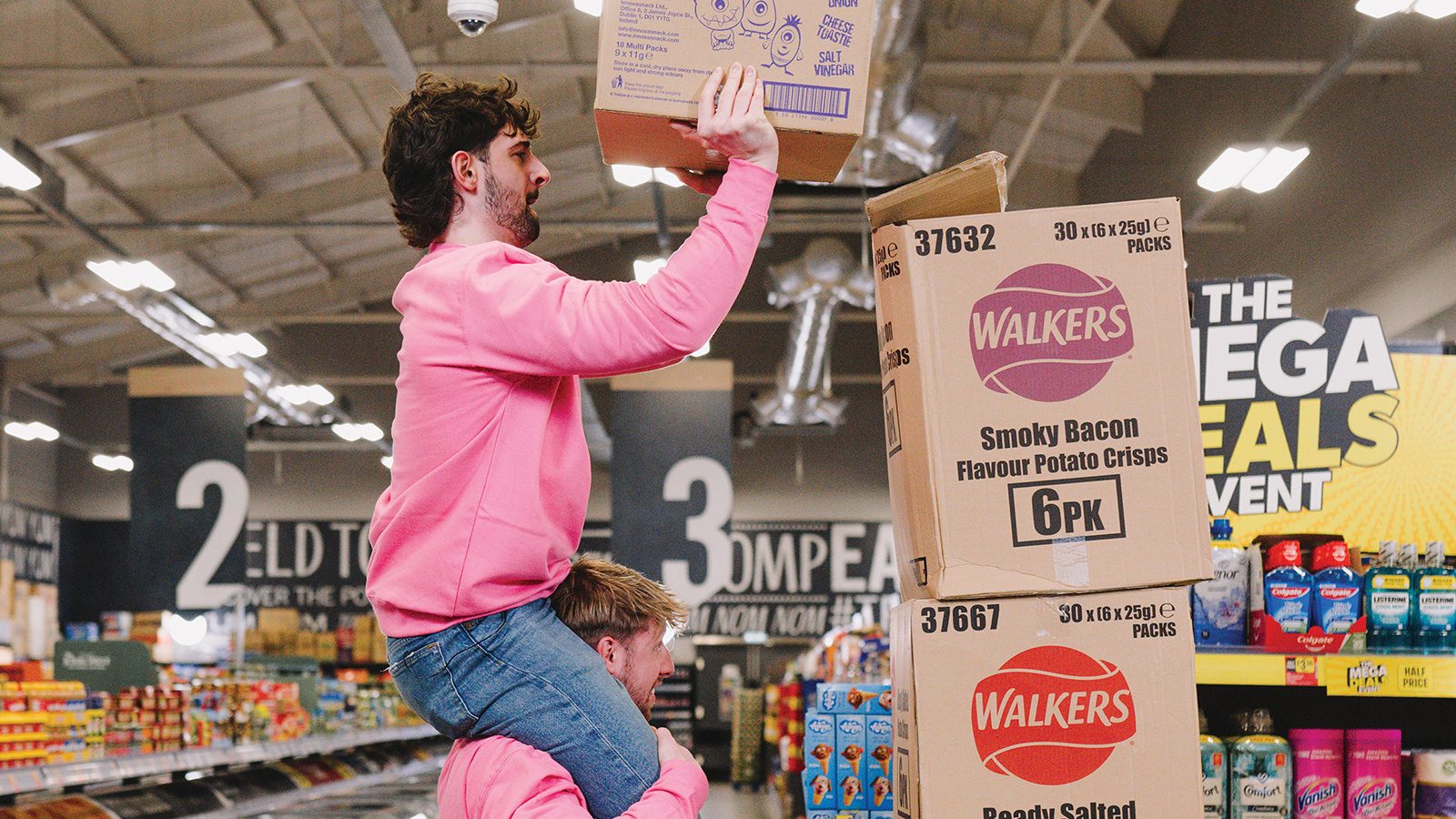
The Sidemen have since put their own spin on another classic ITV/Fremantle format with Supermarket Sweep, as well as ITV Studios’ The Chase, drawing millions of views online. Victor Bengtsson, Sidemen Entertainment’s managing director, says this highlights a shift in the TV industry away from working with online creators in a superficial way towards greater collaboration.
“When we did The Chase, they wanted to be part of that and invited us to use their studios and collaborate. One of the things we had been pushing against was that TV wanted us as talent, not as partners. That’s now changing,” he says. “It started a journey where we saw what it was like to build a gameshow format, and that has led us to develop our own IP.”
This includes Inside, The Sidemen’s Big Brother-esque reality show, season three of which launched on Netflix in March and went straight to number one.
Meanwhile, The Sidemen’s versions of Family Fortunes and Supermarket Sweep perhaps show where the unscripted entertainment industry is heading: louder, leaner, faster. Bengtsson says The Sidemen can turn around an episode of Family Fortunes from production to air in about four days.
“Since Covid, people are not looking to be blown away by production value. They want connection and community,” he says. “What’s great about gameshows [on social video] is that you can play along in the live chat. The interactivity of YouTube is very different and actually lends itself better to TV formats than TV itself.
“In the 1980s and 90s, you’d sit at home as a family on Friday night and play along. We launched a reality show on YouTube to see what happens if 350,000 people tune into an episode together. Turns out it’s quite chaotic and fun.”
Among The Sidemen’s recent YouTube videos are Try Not To Piss 2, Sidemen Last To Leave The Circle Wins $100,000 and We Made YouTube’s Biggest Talent Show, so it’s not all reboots of old TV IP (though the latter shares more than a few similarities with Britain’s Got Talent, on which The Sidemen’s KSI has been a judge since last year).
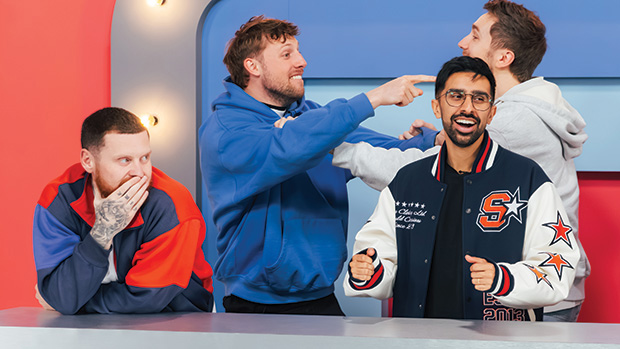
The Sidemen’s take of Family Fourtunes
Bengtsson is clear that he believes TV distributors need The Sidemen more than they need them. “It’s more of something that we do for fun, paying homage to what the boys remember from their youth,” he says.
“The videos that are important for us are the things that we can build our own IP on the back of. We’re a 90-man company with a two-storey base on Old Street. We sell out Wembley Stadium – I don’t need to pick up an old format to change what the bottom line is for us. It’s more the boys getting something in their heads they’d like to try – The Chase, Family Feud, Supermarket Sweep – and thinking, ‘Wouldn’t that be fun?’”
But how about the companies that own these shows? Is licensing them to creators rather than a cable channel like Game Show Network (GSN) a potentially lucrative new source of income?
GSN owner Sony Pictures Television (SPT) recently launched a spin-off from Jeopardy! for YouTube, marking the first time a season of the iconic gameshow has been made exclusively for the Google-owned platform. The show features YouTube creators and viral sensations Monét X Change, Rebecca Black and Brennan Lee Mulligan.
SPT’s president of gameshows Suzanne Prete believes it’s “too early” to tell whether embracing YouTube will become a major new revenue stream for format owners, but it is undoubtedly a way to reach different generations.
“This is a one-off stunt event for now that marks the beginning of our bigger expansion into the digital native space,” Prete says. “It’s a way to resonate with the audience on YouTube that has a love for the brand. We know that people grew up with Jeopardy!. They recognise it instantly and they’re connected. It’s a show that resonates across generations.
“This is part of an overall franchise strategy for Jeopardy! and Wheel of Fortune across digital, social, linear and streaming. I don’t think it’s a knee-jerk reaction to audiences tuning into YouTube. It’s just another spoke on the wheel.”
Lucas Green, chief content officer, operations at Banijay Entertainment, believes it’s a way to revive “dormant formats with great legacy value” and is pleased to see these arrangements becoming more formalised, given the amount of IP infringement that was going on.
“It’s not a finance model like traditional broadcasting. We’re all learning about attaching brands, how you split revenues, whether it lives on their channel or a Banijay channel, what platform it sits on,” Green says.
“These are really important learning experiences to grapple with and refine new business models. It’s not as simple as ‘produce the show, stick it on YouTube, clock up hundreds of thousands in instant revenues.’ You need a lot of views and a lot of brand funding to get to that.”
Nevertheless, Green says there are mutual benefits beyond the money. “Creators know their audiences well, speak to their audiences well and are able to put content out there and quickly understand what their audience likes and adapt to it,” he says.
“They use that data instantly to tweak content and there’s a lot we can learn from that. They’re reaching that younger audience traditional TV platforms are really struggling to bring in front of a TV screen at home. We’ve seen with MasterChef Creators, which is a digital spin-off from MasterChef we do in Latin America, that it doesn’t cannibalise your audience – it supplements the main show.
“It’s much better to work together. TV production companies like Banijay, Fremantle, ITV Studios and BBC Studios have expertise in being responsible. We know about compliance if there is money at stake, as well as health and safety if you’re doing big stunts.
“Even if you’re just doing a gameshow then participant welfare is important. There’s a lot we can learn from each other to produce better content that can be really sustainable. It’s much better to collaborate than see it as a threat.”
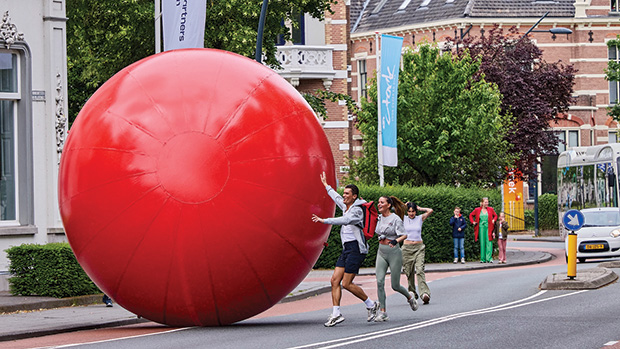
Banijay Rights format Let’s Play Ball started on YouTube
Furthermore, Green sees YouTube and creators as a source of IP that companies like his can take the other way, as in the case of Dutch format Let’s Play Ball, which started on YouTube via StukTV before airing on SBS6 in the Netherlands. Banijay Rights is now shopping the format globally, with a UK version in the works with Last One Laughing UK producers Initial and Zeppotron.
“You can spot things, look at the data and use that to prove to broadcasters there’s an appetite for it,” he adds.
That’s a point with which Prete at SPT strongly agrees: “The landscape of entertainment is evolving very quickly and anything’s possible. It can work in either direction and it makes it a very exciting time to be in television, especially gameshows.”
Formats industry expert Siobhan Crawford, however, is sceptical. Could TV distributors be selling their prize assets to the competition, who has a bit of fun with it for a week and then moves on to something else?
“For me, I still struggle to understand if digital creators really respect established IP – are they acquiring rights or just doing take-offs of old shows ‘unofficially’?” she asks.
“When we hear that people make digital content for as little as US$10,000 an episode, how do you do that with a format? If you’re producing established IP that’s surely impossible below US$50,000 and for a 5% format fee the distributor and format owner basically get buttons.”
When it comes to embracing new business models, Luci Sanan of 53 Degrees North Media and Cowshed Ventures does see potential. She’s helped companies such as Tresor, Krempelwood and Propagate set up YouTube channels that are a mix of original content and library titles.
“Quality content that audiences want will find an audience if it’s packaged and published in the right way,” she says. “In terms of catalogue content finding homes on YouTube, it’s just an incredibly exciting space because it’s by and large a non-exclusive environment, where producers can earn incremental revenue on a long-term basis without really any sort of cap. You can be licensing that content to channel after channel after channel after channel, and it’s all incremental because the audience is very fragmented.
“Meanwhile, it’s an interesting journey to discover what original content works alongside aggregated third-party. There are legacy pioneers like [All3Media-owned] Little Dot that have set up very established aggregated channels, and then there are those running really successful originals channels, but not many in the middle. It’s quite early days on that and every day is a school day.”
Like Prete at Sony, Sanan says it’s a mistake to view content as either/or, YouTube or linear, digital or traditional. It’s increasingly all just one thing.
“It’s part of a broader IP ecosystem and the content is either good or it’s not,” she explains. “Some things you might want to start on YouTube and see if it has potential in format or tape or onward licensing. It’s part of stacking revenues. Sometimes it might work the other way. You might be looking at a produced piece of content and envisaging how that can be monetised on YouTube and socials.
“We used to be in a very simple supply chain of broadcaster, production company, distributor. Now it’s a mad ecosystem commercially, and that’s really exciting because there’s loads of different ways to fund it and there’s loads of different ways to exploit it. Increasingly, people will stop calling it YouTube-first, or digital-first, and it’ll just be content.”
Matt Campion, founder and creative director of London-based digital and TV producer Spirit Studios, recently launched an initiative called IP360 that aims to transform creative ideas into multi-platform content brands.
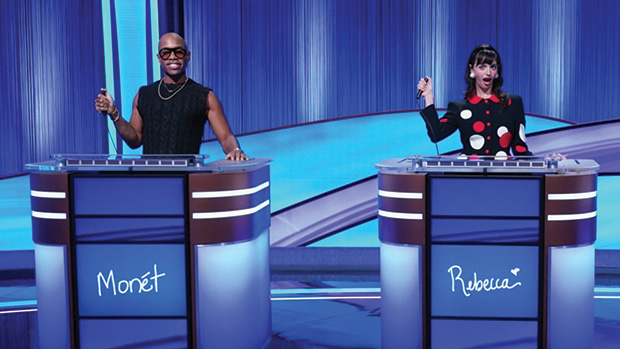
YouTube spin-off Jeopardy! features Monét X Change and Rebecca Black
He says: “Who knew Family Fortunes would be the future of YouTube? Well, The Sidemen did. As a producer in this space watching the landscape shift, this is a masterclass in modern IP strategy.
“The Sidemen will have definitely grown up watching Family Fortunes and so it’s quite interesting when people talk about TV dying and it feeling old. It clearly doesn’t to these creators. They are having fun with it, almost spoofing it, but they’re willing to put enough money into it to make it look more polished than a lot of creator stuff. So that begs the question, is the format still king?
“Spirit has been in digital for a long time and we also make television. Over the years it feels like anyone working in digital has been watching TV budgets shrink and as they’ve seen a table or a chair get kicked out they’ve thought, ‘Oh, we’ll have that over here.’ It’s like they’re rebuilding television over there in a different way, as the money moves.
“As this generation of self-producing people and creators are growing up they’re seeing the value in a format, because formats are built for retention, which you need online. You just need to dress them in a bit of a different way.”
Speaking of which, long-running modelling competition format SupermodelMe is getting the microseries treatment and will be relaunched as a vertical show on microdrama platform FlareFlow later this year, marking the beginning of a potential trend.
FlareFlow’s owner, China’s COL Group, and producer Singapore-based Refinery Media have teamed up to reimagine the reality franchise, which was created by Karen Seah and launched in Asia in 2009, later moving to Netflix.
Refinery Media and COL said the deal, announced at FilmArt in Hong Kong in March, marks the first time an established reality IP has been fully “re-engineered” for mobile-first episodic storytelling on a large scale.
For Danny Rowlands, senior VP of global development at Fremantle, doing deals with creators is a key part of the TV industry’s evolution. “If you’ve got strong IP and you’re willing to let creators have the freedom to revive and take control of the direction, there is a true opportunity for success,” he says.
“For some people, there is a mindset shift needed to let this happen. This is not only an opportunity from a commercial standpoint, but a vital opportunity to understand audiences and creativity to allow the industry to continue to deliver entertainment for the next wave of consumers.”