YouTube CEO Neal Mohan admits rise of ‘AI slop’ and vows to reduce its spread
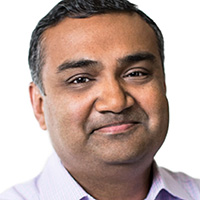
YouTube will work to reduce the spread of ‘AI slop’ on the platform, according to the platform’s CEO, Neal Mohan.
In a post on YouTube’s official blog, Mohan acknowledged industry-wide concerns around the AI slop flooding the platform and said the company plans to manage it with the systems it uses to combat spam and clickbait.
“The rise of AI has raised concerns about low-quality content, aka AI slop. As an open platform, we allow for a broad range of free expression while ensuring YouTube remains a place where people feel good spending their time,” he said.
“Over the past 20 years we’ve learned not to impose any preconceived notions on the creator ecosystem. Today, once odd trends like ASMR and watching other people play video games are mainstream hits. But with this openness comes a responsibility to maintain the high-quality viewing experience that people want.
“To reduce the spread of low-quality AI content, we’re actively building on our established systems that have been very successful in combatting spam and clickbait, and reducing the spread of low-quality, repetitive content.”
The move comes as YouTube expands the AI tools available to the platform’s content creators. According to Mohan, more than one million channels used its AI creation tools daily in December.
This year, the platform will enable users to create shorts using their own likeness, produce games with a simple text prompt and experiment with music.
The CEO added that AI transparency and protections will be a key focus for YouTube this year, noting that “it’s becoming harder to detect what’s real and what’s AI-generated.”
“This is particularly critical when it comes to deepfakes. We clearly label content created by YouTube’s AI products, and creators must disclose when they’ve created realistic altered or synthetic content. Because labels aren’t always enough, we remove any harmful synthetic media that violates our Community Guidelines,” he said.
“We’re also building on the foundation of Content ID – a system our partners have trusted for well over a decade – to equip creators with new tools to manage the use of their likeness in AI-generated content. Finally, we remain committed to protecting creative integrity by supporting critical legislation like the NO FAKES Act.”
Concerns around AI-generated content have been of particular significance in the kids’ industry, as have fears around the potentially harmful and unsuitable content children could easily stumble upon.
Mohan shrugged off those concerns, arguing: “When it comes to kids and teens, we have a strong track record of offering age-appropriate experiences, from the launch of the YouTube Kids app in 2015 to a supervised experience for pre-teens in 2021.”
This year, the exec said YouTube will make it easier for parents to set up new kid accounts and easily switch between accounts, “ensuring that everyone in the family is in the right viewing experience.”
Last week, YouTube also announced updates aimed at strengthening and simplifying parental controls, through which parents will be able to control how much time their kids spend scrolling through YouTube Shorts as the social media ban for under-16s in Australia looks set to be repeated in the UK and France.
“This is all in service of empowering parents to protect their kids in the digital world, not from the digital world,” Mohan said.
Mohan’s comments came during an update on YouTube’s plans for 2026, where the exec identified the platform as “the new TV.”
“YouTubers are buying studio-sized lots in Hollywood and beyond to pioneer new formats and produce beautifully produced, must-see TV. The era of dismissing this content as simply ‘UGC’ is long over. These are shows, built by creators who greenlight themselves,” he said.
“Whether they’re watching on a small screen in their hand or the largest screen in their home, viewers choose YouTube for an unmatched breadth of content: longform, shorts, music videos, live streams, podcasts and more.
“YouTube is the epicentre of culture. Our creators are reinventing entertainment and building the media companies of the future, and we continue to be the best place for them to grow a business. YouTube has the scale, community and technological investments to lead the creative industry into this next era.”
This year, YouTube will launch YouTube TV Plans, offering more than 10 genre-specific packages including sports, entertainment and news aimed at viewing on televisions.