Dandelooo's Pétry on staying true to what’s meaningful
By Karolina Kaminska 03/02/2026
Emmanuèle Pétry, producer and head of international at French animation company Dandelooo, talks about the necessity for regulatory intervention amid the rise of YouTube and how AI could improve the quality of programmes.
What are the biggest challenges and opportunities for kids’ TV in 2026?
The biggest challenge is to escape from drowning in an ocean of free, disposable ‘chewing gum’ content. The biggest opportunity for kids’ TV in Europe lies in preserving and maintaining the viability of the now mature balance of savvy producers, passionate pubcasters, sustainable subsidies, strong unions and talented studios.
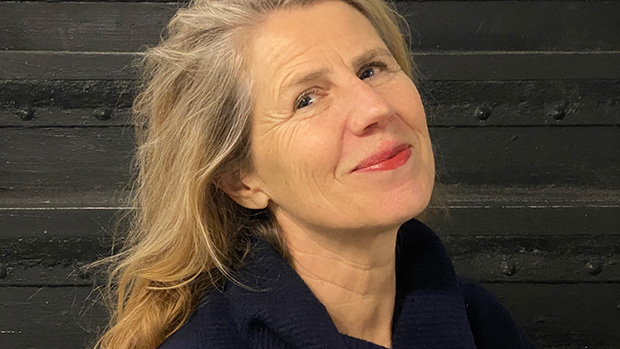
Emmanuèle Pétry, producer and head of international at French animation company Dandelooo
What programming trends do you expect to see this year?
I suspect there will be more soft and reassuring programmes for preschoolers and more empowering ‘everyday superhero’ series for the older kids. In an extremely stressful era that we are going through, kids need to feel safe and our stories can help provide that.
How will demand for content evolve in 2026?
During Cartoon Business in Brussels last year, David Kleeman from Dubit shared with us a striking and scary chart showing the various kids’ activities. Across all ages, kids spend the most time per week on essential activities like eating, sleeping and school. But, starting from age seven, time spent on digital activities (video, social media and gaming) rose sharply. And the digital activity outpaced physical activity across all markets. As a mum and a grandma, this is really scary and deeply worrying. As a producer, well that answers your question. Demand is constantly growing, so our job is to make sure the content they consume is as good as it can possibly be.
How will the economic crisis change commissioning/buying in the kids’ industry this year?
Every day I speak to buyers and commissioners and there’s a consistent picture – each one of them tells me that their budgets are being cut, people are being laid off and in France we don’t even have an approved budget. In truth, this question is best asked to them… but I suspect there will be more Sky Kids situations whereby homegrown productions will be reduced – perhaps even halted and acquisitions raised. Unless there is a legal obligation to invest, that virtuous system simply can’t sustain itself.
What impact will AI continue to have on the kids’ sector?
As an optimist I can only hope it will help support the non-creative, labour-intensive tasks and not hurt the animation jobs. But, as a bit of a Cassandra, I also pray that the regulation will hold back the tidal wave. For sure, there’s no doubt that cheap programmes will be produced faster. But Jean-Baptiste (my business partner) and I believe that as with all technological improvements in our industry, AI will not hurt employment, instead, it will actually help increase the quality of programmes – by enabling more efficient checking, retakes and refinement. AI therefore has the potential to improve competitiveness in a genuinely virtuous way.
How will the growth of the creator economy affect the kids’ industry?
I think it is a great opportunity for raw talent to emerge in an organic way and it will not affect the ‘traditional TV’ economy. I see it more on the tween and young adult market. A great example is the amazing experiment from the NRK [in Norway] team who commissioned a provocative, tongue-in-cheek series from a group of young YouTube artists. This series, Hellerudsvingen, has been notable in winning back and holding onto the 12-plus audience in a very successful way.
What consequences might the continuing growth of YouTube have?
YouTube has taken away an estimated 30% of the broadcasters’ advertising revenue and has not spent one single euro in content creation. That imbalance is no longer sustainable and has to be fixed. There needs to be some regulatory intervention to oblige platforms of this scale to enter and participate meaningfully into the production arena. Furthermore, I believe YouTube’s dominance will continue to polarise children’s viewing habits, especially among the younger audiences. More sophisticated, media-savvy and educated parents will be aware of the best offers whether free (like the great OKKO in France) or not (like Benshi or Sandbox) and the mass viewers will use YouTube as a free 24/7 babysitter despite the terrible side effects it will have on kids.
How might the rise in popularity of social gaming platforms like Roblox impact or influence the kids’ sector?
I find it quite healthy that kids prefer to be active and control their actions in a large community of gamers rather than be passive and alone consuming content in front of a TV screen. It is the producers’ challenge and responsibility to remain creative by offering smart, engaging and fun stories to captivate audiences and keep our industry alive. Maybe this goes back to our mission of also nurturing, sheltering and providing reassurance to children?
How will Dandelooo be changing its strategy to adapt to the new landscape in 2026?
A couple of nights ago, I had a dream that I was developing a new series with a female heroine called Georgia (true story), she was a mixed-race teenager. She was smart, fast, funny, beautiful, optimistic, energetic, self-confident and saving the world. Maybe we should follow her strategy and crystalise our approach to 2026? Tell bold, diverse, character-driven stories – creating content that engages, inspires and resonates with today’s kids while staying true to what makes our industry meaningful.