The hype around microdramas is not set to convince UK broadcasters 5 and Sky to experiment with the format, though Channel 4 is more open to the idea and some funding bodies are considering getting involved – as long as the actors keep most of their clothes on.
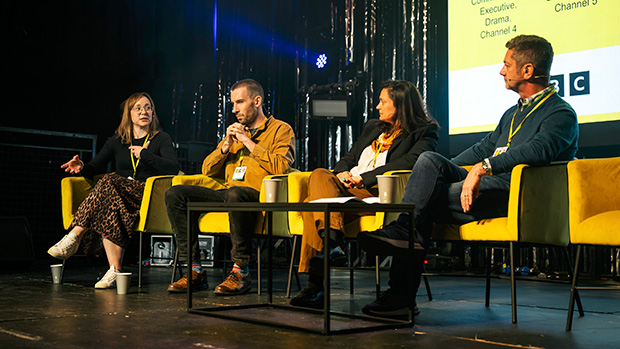
L-R: Louise Donald, Paul Testar, Megan Spanjian and Marc Lorber at the Creative Cities Convention
Charlie Swinbourne
Discussing the booming microdrama industry at the Creative Cities Convention in Liverpool this week, executives from Paramount-owned 5 and Comcast-owned Sky were cool on the format, which is typified by one- or two-minute episodes and increasingly extreme storylines with heated emotional cliffhangers.
Asked if they would be joining the BBC in dipping their toes into the space, Paul Testar, drama commissioning editor at 5, and Megan Spanjian, senior executive producer at Sky Entertainment Group, said it would not be happening any time soon.
However, like any executives wary of their words coming back to bite them, they also kept the door open for future experimentation with a format that reached global revenues of US$11bn last year and will grow to US$14bn by the end of 2026, according to UK research firm Omdia.
“I’m sure things could change, but it’s not something the 5 audience might be attuned to. We’re very focused on supercharging our streaming platform, but microdramas are not on the radar,” said Testar.
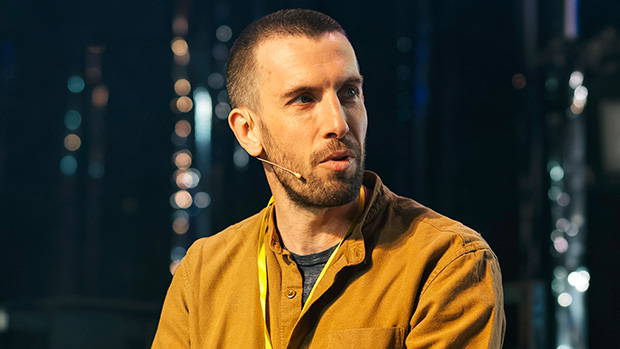
Testar said microdramas are ‘not on the radar’ for 5
Charlie Swinbourne
Spanjian said Sky felt similarly to 5 but added that she could see the value in bringing off-screen talent who have honed their ability to tell stories through microdramas to its high-end dramas. “There is validity in an ability to tell stories in specified amounts of time and really concentrate on what you want to say, with a real rigour in the storytelling. It’s not for us at the moment, but we definitely believe in the power of transferable skills,” said Spanjian.
Meanwhile, Louise Donald, commissioning executive for drama at Channel 4, agreed that microdramas could be a space to mine new talent. “We’re aware the audience is there for it. It would be brilliant to harness new voices, directors and producers. We’d love to help develop those voices and people,” Donald said.
The executives were speaking on a panel titled Mainstream to Microdrama, exploring what commissioners want, as well as how storytelling, business models and audience habits are evolving. The session also featured All3Media-owned, Liverpool-based Lime Pictures, producer of Channel 4’s long-running soap Hollyoaks. During the panel, Lime unveiled its first vertical drama as it targets UK fans of microdramas online.
Angelo Abela, joint head of scripted, kids and family at Lime Pictures, showed a short clip from Make Me a Match, which follows a woman who is in love with the grieving husband of her deceased best friend. It is one of two vertical dramas Lime has developed, with both set to launch on an as-yet-unannounced platform, C21 understands.
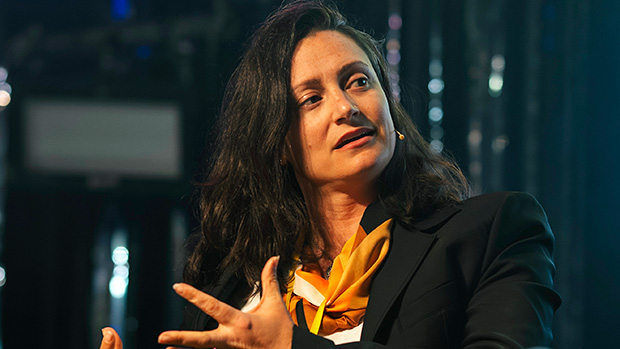
Spanjian said Sky is not currently looking at microdramas but sees value in their storytelling discipline
Charlie Swinbourne
Abela said he expects other UK production companies to follow Lime into the format and that producers of continuing drama are best placed to make the move, given their experience producing to tight budgets and short deadlines, as well as crafting cliffhangers.
However, international coproduction expert Marc Lorber pointed out that in China, where microdramas first originated a few years ago, the multibillion-dollar industry is being rapidly disrupted by AI tools that can make shows for just US$30 a minute, with no cameras, crew or human performers, according to a recent eye-opening report in The New York Times.
Crucially, the Chinese government is eagerly pumping money into the sector and encouraging the use of AI to make microdramas as it eyes an opportunity to grow its cultural footprint around the world. Meanwhile, in the US state of Louisiana, there is talk of a US$10m portfolio fund designed to support sustained high-volume production of microdramas.
Calls to lower the threshold for the high-end TV tax credit, so a greater range of dramas can be made in the UK rather than only super-premium shows, have so far been ignored by the UK government. As a result, a UK tax credit for microdramas looks a way off.
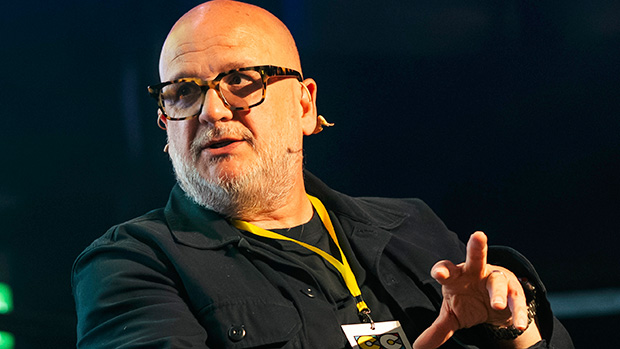
Soap producers are well placed to move into microdramas, according to Lime Pictures’ Angelo Abela
Charlie Swinbourne
That said, on a Creative Cities panel later in the day, executives from funding bodies in the North of England discussed their attitudes towards microdramas. They expressed their openness to helping incentivise production such content, while raising concerns about current standards when asked by C21 if the tawdry nature of many microdramas is a turn-off.
“Let’s not talk about porn. But if it’s anything other than that, we’re interested. We’re genre-agnostic,” said Alison Gwynn, CEO of North East Screen, which is working with the BBC on a digital accelerator. “The key thing for us is we need to be able to support our production companies to be sustainable. And if there are fewer commissions and opportunities, everyone needs a side hustle, so we’d be remiss not to look at digital content, and microdrama is in that mix.”
Rob Page, MD of Screen Manchester and Space Studios Manchester, said microdramas could form part of its fledgling Screen Production Fund, which currently focuses on scripted, non-scripted, children’s and animation, given the fund is in its relative infancy and open to tweaks.
Screen Yorkshire CEO Caroline Cooper Charles said the body’s fund, which has been running for over a decade, could be due some “refreshing” to adapt to the new ways people are watching content and be made more flexible.
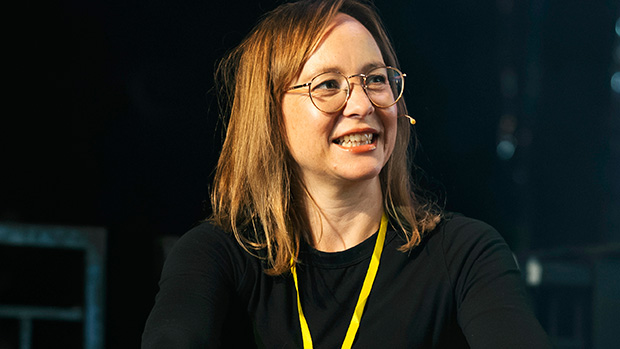
Louise Donald said Channel 4 sees microdramas as a potential way to identify new talent
Charlie Swinbourne
“At the moment it’s really concentrated on traditional media. But [the content] has to be quality, whatever it is. My view on vertical drama is that there’s a lot of crap out there at the moment. But it’s just a format, and people will always crave sophisticated storytelling and it will evolve quickly. We shouldn’t just be looking at that happening, but engaging with it too.”
Moderator John Whittle, MD of Lime Pictures and Wise Owl Films, added: “I agree. The UK is really well equipped to help it evolve into something a bit more than what it is now.”
This is an extract from a longer C21Investigates piece that will be published next week looking at the UK television industry’s attitude towards microdramas.