English remains the dominant currency of the international scripted market, but the question of when to use it – and when not to – is more nuanced than ever, according to international coproduction pundits.
It’s a tough gig building high-end scripted coproductions in a market that has contracted sharply since the streaming boom of the early 2020s. But it’s in this challenged market that the need for coproductions and risk-sharing has never been greater. That’s the irony of trying to get premium drama off the ground these days.
“The market has been tough since the bursting of the streaming bubble in 2022,” says Laurent Boissel, joint CEO and co-founder of Paris-based APC Studios. “We’re now looking at a much lower number of drama series being made globally – possibly 50% less than what it was three or four years ago, which obviously was the high point of Peak TV 2022. We’re also looking at a market that is now much more risk-averse – not only financially but also creatively. Across the board, we see a standardisation of shows being made. Stories tend to be more mainstream and the cast is king.”
For Anni Faurbye Fernandez, co-owner and CEO of Nevis Productions, operating out of Copenhagen and Stockholm, the market contraction has made coproduction not merely desirable but essential. “Today we need to coproduce even more,” says the former Yellow Bird CEO, “because it’s tougher times than it was even a few years ago.”
Against this backdrop, the role of the English language becomes a defining strategic question. As Boissel puts it plainly, the English-language market is “five to 10 times bigger” than the non-English market in international distribution terms, and the financial implications cascade through every stage of a project’s development and sale.
“Distribution advances are much bigger and the potential is much bigger,” he says of the Anglophone market. “It’s a different scale.” For a distribution company trying to build sustainable revenue, he adds, “focusing on strictly foreign-language drama must be very, very difficult, because I’m not sure you can get to the sort of scale you need to justify the cost of a distribution business.”
Yet the English language is not a solution that can simply be imposed on a project where it does not belong. Boissel describes what happens when a project presents itself in English without organic justification: “We immediately reject it because it doesn’t really work. If you have a Swedish story or a Finnish story but told by Swedish or Finnish actors in broken English – even if it’s 100% in English, it will never, never be considered as an English-language series by the international market. So my advice would be: don’t do it.”
Carlo Dusi, founder and MD of Turning Point Pictures, and a veteran of Endor Productions and Red Arrow Studios International, reinforces the point from a coproduction perspective, distinguishing between a purely commercial question and an editorial one. There is “a ceiling beyond which it’s very hard to go in terms of actual prices for non-English-language shows,” he says, and therefore a ceiling on the budgets those productions can support.
But the language decision also has to reflect the expectations of the coproducing broadcasters. “Some broadcasters will be happy with dubbing,” Dusi notes, pointing to the experience of Vienna Blood, four seasons of which he produced at Endor for ORF and ZDF with Austrian coproducers MR Film. “Part of our budget was delivering a dubbed German version to ZDF, and they would make both the dubbed German version and the English-language version subtitled in German available to their audience to choose from. That was fine.”
But in the UK and the US, dubbed content simply does not sell. “Dubbing doesn’t work. Dubbed content just doesn’t fly. Nobody will buy it.”
Faurbye Fernandez describes the strategic value she saw by producing Wallander, starring Kenneth Branagh, for the BBC, filmed in Sweden but conducted entirely in English with British actors. “It worked really well – everywhere else but Sweden,” she says. “But it was for the BBC, so…” The model worked, Boissel adds, because it was a British series at its core.
The same logic applied to Faurbye Fernandez’s work on Wisting, a Norwegian crime drama that starred Carrie-Anne Moss (The Matrix) as an FBI agent, organically justifying a significant English-language presence in the early run of the series. “I believe it helped selling the series that she was onboard,” she says. Boissel agrees: “You had a big American cast, so that makes it much more legitimate,” while Dusi adds “It has to be authentic and organic to the story, not artificial.”
The qualification matters most when selling to global streamers, where the English-language premium partly dissolves. As Boissel points out, if you are selling a project to a global streamer, the language becomes less decisive “because the bigger potential you get from being in English is a distribution thing. And if you’re selling globally to a streamer, there won’t be any distribution anyway. The streamers will do all of the dubbing and subtitling.”
The issue of authenticity crops up again regarding the practical architecture of coproduction relationships and the consensus seems to be a set of principles that prioritises human chemistry over contractual structure. “Authenticity is really the key word” across the whole copro space, says Boissel. “A coproduction starts with two production companies wanting to work together. You and your copro partner have to share values, a modus operandi and chemistry, because in most coproduction relationships there is a long process of development and production, and your relationship is going to be tested. That much is sure. A copro is a true partnership, and you’d better go into battle with someone you trust and can rely on by your side.”

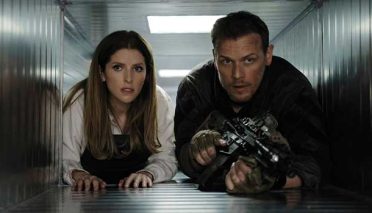
Norwegian crime drama Wisting’s casting of Carrie-Anne Moss helped sell the series
All three execs endorsed the 50-50 coproduction model as their preferred framework. “The only rule is that you share everything,” says Boissel. “It makes a very simple deal memo. But if you don’t get on, any decision is potentially a conflict.” He offers a practical diagnostic for evaluating potential partners before committing: “If, in the negotiation of a coproduction with a partner, it gets very complicated, walk away, because it’s generally a precursor. And if it’s the opposite, if it’s very fluid, it’s a good indicator.”
Dusi echoes the warning about underestimating the relational investment required. “Lots of people really underestimate that investment of time that you have to put into getting to know your prospective partners, getting to understand how they work, not making assumptions about it working the way you expect. It’s about avoiding those instances of miscommunication or misunderstanding that if they happen too far down the road can really break a project. You have to build it not just as a piece of business, but as a human relationship.”
The benefits of getting that chemistry right, and choosing the right languages to shoot in, are illustrated by two case studies from opposite ends of the geographical spectrum. Faurbye Fernandez describes a project currently in development at Nevis, a crime series set across Denmark, Norway and Belgium in the world of shipping. The story’s roots across all three territories made the coproduction logic self-evident.
“Denmark is a big shipping nation, Norway is a big shipping nation, then there’s some crime going on in the ports of Belgium,” she explains. The application to Creative Europe’s co-development fund received 96 points out of 100, a score Faurbye Fernandez attributes to the authenticity of the creative fit. “The story is rooted in all three countries; even though maybe 70% or 80% is in Danish you have plotlines and stories that take place in the other countries.”
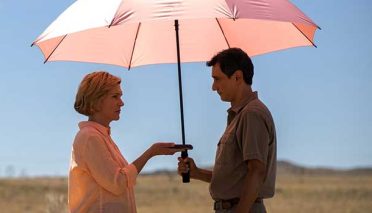
Boissel’s case study is Obituary, an Irish crime drama coproduced by APC Studios UK and Magamedia over five years and two seasons, ultimately picked up by Hulu as a prebuy. The show, he notes, was not geographically motivated in the way Faurbye Fernandez’s container project is – “Obituary is a completely Irish story” – but the coproduction relationship proved so successful that APC and Magamedia have since created a joint venture to develop further series out of Ireland. The partnership also benefited from Creative Europe production funding for the second season, with the fund recognising it as a coproduction between Ireland and France, routed through APC’s UK subsidiary.
“Creative Europe considered that it was a straight coproduction between Ireland and France, despite the fact that it went through our UK subsidiary,” Boissel says. The key was APC’s French ownership structure: as he makes clear, the majority of a company must be owned by an EU entity for the Creative Europe relationship to hold – a point of direct relevance to UK producers, who lost access to Creative Europe funding following Brexit.
Vienna Blood offers a more complex version of the multi-partner challenge. Dusi’s production – a period crime drama set in early-20th-century Vienna, developed from British IP with a British writer – was commissioned primarily by ORF and ZDF, with BBC and PBS joining during production of the first season. The result was four overlapping sets of expectations that required careful management.
“We found ourselves having to really work to four sets of expectations which had certain differences among them,” Dusi says. On the first season, the production delivered two slightly different versions – a primary cut for the Austrian and German broadcasters and an international cut for the BBC and PBS – after the team concluded that certain moments of humour in the primary version “just weren’t going to land in terms of humour and in terms of tone with our British and American audiences.”
The costs of that re-edit were absorbed by Red Arrow Studios as a sales and distribution expense. By the second season, the learning from that process was sufficiently embedded that a single version could serve all broadcasters.
The commercial logic of the BBC relationship extended well beyond the broadcaster’s own audience. “There was such value for an English-language show – it would have been different if we’d been making a German-language show – in being able to go out to the international market and say we’re going to be on the BBC,” Dusi recalls. “We ended up with SBS in Australia, France, a number of other mainly public service broadcasters that took the BBC involvement as a real sign of quality.”
On the question of genre and language, Faurbye Fernandez draws a distinction that has an impact on the finances. “What I have produced a lot in the past is crime, and crime travels even though it’s not English-language. So then it’s easier to make coproductions outside Scandinavia, whereas if it’s comedy, it’s much more difficult to find coproduction solutions and financing from outside.”

APC Studios and Magamedia copro Obituary is described as a ‘completely Irish story’
Boissel makes a similar point about Obituary: “Comedies are very complicated [to sell] on the international market, so it was [pitched as] more an elevated crime drama with a darkly comedic tone, with one-hour-long episodes.” The writer, Ray Lawlor, “has done a fantastic job, because it’s one of these cases where a very local story with a very typical Irish humour – which can sometimes travel, but not always – has done something really universal that has spoken to a lot of people.”
When it comes to incentives and the financial structures that underpin coproductions, Boissel points to what he describes as an elephant in the room for UK productions: the million-pound-per-hour threshold for the UK’s television tax credit system, which he argues is “very penalising for a lot of lower-budget shows.” The practical consequence is that many shows budgeted below that threshold are produced outside the UK, in Hungary, Malta, Ireland or the Balkans.
Dusi adds that some lobbying is currently underway to bring the threshold into alignment with the downward pressure on budgets across the industry. “There’s no point in us learning to make shows for less if, by virtue of doing that, we then lose the access to the benefits that we would otherwise have available.” The creative corollary, Boissel notes, is that the best incentives are worthless if the location does not serve the story: “You can run around fishing for the best incentives, but at the end of the day, it’s got to look good and right.”
Dusi is nevertheless emphatic that coproduction should not be seen as cost-free financing. “There is no such thing as free money. Coproduction has a cost. It has a cost to us as producers because we clearly have to pay our partners, quite rightly, for the work that they do. But it also has a cost in administrative and financial terms. You generally have to construct legal structures that require time and effort, and possibly significant legal fees. There’ll often be auditing costs for the spend that you’re trying to get benefits against. It’s not a decision to be taken lightly.”
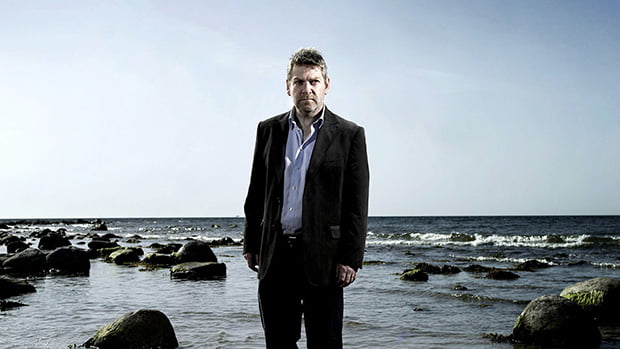
Kenneth Branagh in English-language crime series Wallander
So how to distil all this sage advice into a single principle for producers contemplating their first coproduction? Faurbye Fernandez returns to the negotiation test: “If things go smoothly when you start to negotiate and talk through the project, it will most likely go smoothly as you go on. But if things get difficult or challenging to begin with, then maybe it’s not the right partner.”
Dusi urges due diligence: “Do your homework properly. Don’t assume it’s simple. Don’t assume it’s easy. Talk to people who’ve done it before. Hear about the good stuff and the bad stuff, and properly take time thinking through what you need to know before you get into a coproduction relationship.”
Lastly, Boissel advises wannabe coproducers to look within: “You have to know yourself. Not everyone in this industry is able to work with others. Not everyone is a team player. If you’re not a team player, don’t go into a coproduction, because a proper coproduction – especially a 50-50 one when you’re managing everything jointly together – means that all the script notes, all the edit notes, you will do them together as co-EPs. You need to be a united front with everyone else.”
This article is based on a Talking Trade webinar that took place this month, produced by Liberi Consulting and Julian Scott Associates and moderated by industry veteran Julian Scott.