
Celebrity casting and competition formats keep driving lifestyle hits in food and property television, but as younger viewers migrate to YouTube, C21 investigates how the genre’s biggest players are racing to keep up.
On August 26, home renovation series Totally ’90s House will premiere on HGTV in the US and Warner Bros Discovery (WBD), which owns the cable network, is billing the six-part show as “a real blast from the past.” It is also, tellingly, celebrity-led. The host is Jaleel White, the actor, producer and gameshow host best known as Steve Urkel in Family Matters, who will be joined by a cast of celebrity contestants from the era the show celebrates.
HGTV’s other new launches follow the same playbook: Roast My Rental (produced by TeamSheed and Wheelhouse) is fronted by comedian and actress Leslie Jones, while Extreme Buyers Club (Hit+Run) and A Very Haunted Renovation (Grandma’s House Entertainment) both feature actress Anna Camp, of True Blood, Pitch Perfect and Scream 7 fame.
“Celebrity-led series continue to resonate with our viewers because they pair familiar, well-loved personalities with relatable home stories and transformations,” says Howard Lee, chief creative officer and president of US networks at WBD. “We’re also fortunate to work with celebrities who have a genuine appreciation for HGTV and home design, which comes through authentically on screen and creates a stronger connection with our audience.”
Leaning on celebrity is working for HGTV. But pair a famous face with a competition format – as Totally ’90s House does – and the odds of landing a hit improve again.
Nowhere is that clearer than in cooking and food, where demand overall may be flat (up just 1.5% in 2025 versus 2024, according to research firm Parrot Analytics), but cooking competitions specifically are comfortably outperforming their parent genre, hitting “3.92x the average series demand globally in 2025,” says Christofer Hamilton, industry insights manager at Parrot Analytics. Leading the way were Banijay’s MasterChef (US, Fox) and MasterChef Australia (Network 10), followed by Netflix’s Culinary Class Wars.
Lucas Green, global head of content operations at Banijay, calls MasterChef “not just the most successful food show in the world” but “the most adapted format anywhere of any genre last year.” It spawned 58 seasons across 35 territories in 2025 alone – more than any other unscripted format in any catalogue. The franchise has now been produced in 74 markets, a number still growing as new territories join what Green calls “the MasterChef family.”

The US version of MasterChef
Its durability, he says, rests on a mix of authenticity and flexibility. “First and foremost, it’s a cooking competition for amateur chefs,” explains the exec, thereby turning the “universal experience” of cooking under pressure from everyday ingredients into compelling drama.
Competition series are some of the top shows on WBD’s Food Network in the US, too – although perhaps with higher stakes and more scale thrown in. These include the network’s highest-rated series, Tournament of Champions, hosted by Guy Fieri, where top chefs battle it out for a US$150,000 cash prize, and Chopped, the long-running gameshow where chefs are tasked with creating a meal out of mystery ingredients, now in its 64th season.
Recent additions include last year’s Super Mega Cakes, a cake/building competition series fronted by chef and artist Duff Goldman, produced by Lando Entertainment, and this year’s 100 Cooks, also produced by Lando and described by the network as its “biggest home cook competition of all time.” Hosted by Terry Crews, the latter format sees 100 elite home cooks enter the stadium kitchen arena where they are challenged to an unpredictable, professional-level cooking competition.

Lucas Green
Sarah Lazenby, newly installed creative director at Love Productions – the company behind The Great British Bake Off – and formerly UK VP of unscripted at Hello Sunshine, where she launched Renovation Rescue for Channel 4, has commissioned and produced both food and property formats. As a former C4 commissioner, she was responsible for bringing Bake Off to the channel in the first place.
She describes the show, the 17th season of which airs on Channel 4 in late summer, as “a national institution” that is “evocative of every sort of British summer fete you’ve been to, or every sort of wedding you’ve been to in the British countryside.” It has since been sold into more than 40 territories.
For Lazenby, the appeal of both genres is elemental. “Everyone buys or rents houses and everyone cooks dinner,” she says. But like any unscripted category, food and property are “cyclical,” she notes. “One minute reality’s on trend; the next minute it’s docs; the next minute it’s true crime.” What matters, she argues, “is how they get reinvented and how that hits the zeitgeist.”
Renovation Rescue is a case in point: a renovation format retooled around homeowners ripped off by bad builders, and – inevitably – celebrity-fronted, with season one hosted by TV personality and DIY enthusiast Stacey Solomon. It was recommissioned for a second run, airing from July 30, this time presented by former Love Island star and heating engineer Luke Abbott alongside Irish presenter, model and DJ Vogue Williams, who holds degrees in both construction design management and quantity surveying.
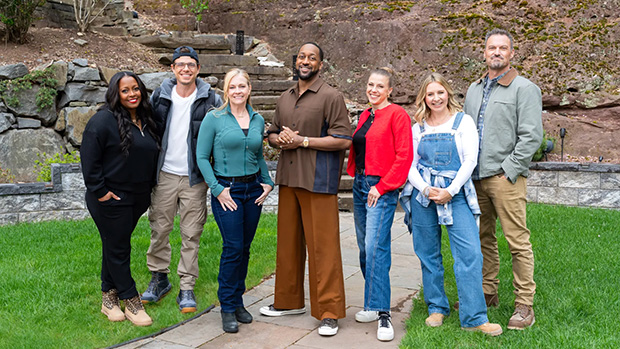
‘Blast from the past’ renovation show Totally ’90s House
Even so, Lazenby cautions that property shows are notoriously hard to execute well. They promise the emotional pay-off of transformation, but only deliver it if real building works, real budgets and real timelines align on-camera. “They’re really difficult shows to pull off on budget and to schedule. You are essentially backseat driving someone else’s [project],” she says.
That difficulty hasn’t stopped a genre rebound. Parrot Analytics data shows home and property posting some of the strongest growth of any unscripted category from 2024 to 2025, up 32.9% year on year. “This is a rebound from a multi-year slump for the category post-pandemic,” says Hamilton, noting that cooking and food, by comparison, is up “a more modest 10.9%.”
The same research flags property and food formats “score very low on travelability” – 0.36 and 0.40 respectively, against 1.32 for cooking competition, which ranks third highest for travelability in unscripted, behind only talent competition and motors and machines. In practice, says Hamilton, that means the “local market play” for property and food formats is “won through format adaptation, not acquisition.”
That is precisely the strategy Seven.One Studios International has built around its back catalogue. “Most of our clients are looking into existing brands that have a proven track record,” says Tobias Schulze, senior VP of global sales at the ProSiebenSat.1-owned distributor. Three titles in its catalogue support this approach: The Taste, Buying Blind and My Restaurant Rocks, which Schulze says “really fulfil what clients are looking for.”
The Taste, originally developed by Kinetic Content for ABC in the US, has since travelled to the UK, Colombia and Brazil. In Germany, where it airs on Sat.1 via Seven.One-owned RedSeven Entertainment, it has run for 14 seasons, with a 15th already planned for year-end.
My Restaurant Rocks, which launched on Kabel Eins in 2013, has clocked close to 2,000 episodes and travelled widely. Sky Uno has recommissioned its Italian version, 4 Ristoranti, for a 12th season and licensed a good deal of tape, while the format has also been adapted in France (TF1) and Spain (La Sexta). Meanwhile, Sky Uno is developing a hotel-based spin-off from the format. Its success, Schulze says, comes down to local pride: “Every week we have five restaurants and every week we are in a different city,” a structure that “really supports that local effect.”
Buying Blind, in which families buy homes unseen, is finding fresh momentum too, pitched as “an aspirational and highly relevant response to the [European] continent’s housing crisis.” RTL Netherlands has ordered a 10th season and acquired the Flemish Belgian version; Play Media has commissioned a ninth Flemish-language season and acquired RTL Netherlands’ show in return; and Banijay has optioned the format, created by Kinetic Content, for French-speaking Belgium.

My Restaurant Rocks launched on Kabel Eins in 2013 and has travelled widely
“It’s pretty hard these days to find the right house in a lot of countries worldwide,” Schulze notes, predicting further territories will follow.
All the same, he is candid about the difficulty of developing genuinely new hits. “Lately I have not seen something where I would say, ‘OK, that’s a 10 out of 10 that should be able to travel.’” It is a pointed admission from a distributor whose model depends on precisely those breakout formats, and a sign of how selective the food and property acquisitions market has become.
Both genres are also facing a demographic headwind. Food and property were “in the five most female-skewing unscripted genres of 2025,” says Hamilton, and both carry some of the oldest audiences in unscripted. “Home and property programming has the oldest audience profile among these categories, with 44.3% of its viewers falling into the Gen X+ demographic,” he says. “It struggles to attract younger viewers, drawing only a 9.2% Gen Z share.”

Tobias Schulze
Banijay’s Green concedes property “feels more of a traditional audience,” reflecting the age at which people typically buy, sell or renovate, but sees “a big opportunity” for formats that speak to renting, house-sharing or non-ownership.
He points to BBC One’s Interior Design Masters with Alan Carr as proof of how this genre can deliver concepts that meet the needs of a younger demographic, describing it as a format that travels on aspiration and craft rather than ownership. “You don’t need to have a deposit or own a house to be into that show and to be able to appreciate it.” It also, he argues, delivers “great public service” value: “You learn as you watch with a show like that.”
Winning back younger viewers increasingly means meeting them on platforms built for them. Streamers are already there. Netflix, which notably under-invests in food and property content relative to its overall slate, this month struck a deal with YouTube culinary star Nick DiGiovanni, while Amazon Prime Video has spent the summer partnering with Sidemen Productions, the outfit behind YouTube collective The Sidemen, on cooking series Sidemen Present: SideMenu.
Shannon Royal, senior creative producer at Sidemen, says food was a “natural fit” given the group has “done food content for years and years and years,” including an annual Christmas cook-off and collaborations with creators such as DiGiovanni.

The Taste has aired on Sat.1 for 14 seasons
SideMenu launched with a hybrid release, with episode one premiering on the MoreSidemen YouTube channel (just under 10 million subscribers) on June 18, and Prime Video exclusively launching episode two the following day – what Royal calls “probably the first ever show on Amazon that was premiered across multiple platforms.” For Amazon, it meant drawing on Sidemen’s audience, while Sidemen tapped Amazon’s customer base in return.
By mid-June the series had passed five million views on MoreSidemen alone, with further episodes expected to add “at least” another million; Royal says both partners are “really happy with the numbers,” although a second season is not yet confirmed.
Traditional players are moving the same way. In February, UK food media brand Good Food launched YouTube channel Good Food Tasted, debuting with competitive cooking series Spin the Dish, hosted by siblings Kola and Yinka Bokinni and produced by Fawkes Digital.

BBC One’s Interior Design Masters with Alan Carr
HGTV is pairing Totally ’90s House with a six-part YouTube companion series with the working title House Call: ’90s Edition. Last year, Banijay and Endemol Shine Brazil launched MasterChef Creators, the format’s first digital spin-off, with YouTube in Latin America. Green calls it “a new casting approach” that is “absolutely doubling down into the content creator’s appeal of doing food content,” crediting it with helping the flagship show launch to a bigger, younger audience.
Green is bullish about longform digital as the space where the next generation of food and property formats will emerge, arguing audiences want more than food photography on their feed: “They want that sort of storytelling experience and they want to really learn from finding out how it’s done and getting tips and getting shortcuts and really learning about the craft of good cookery rather than just nice pictures.”
He cites Jamie Oliver as an example. The Jamie Oliver Group has hired creative agency Baby Teeth to drive growth across the UK, US and “new digital territories,” according to marketing trade publication Campaign, while the chef is reportedly launching Jamie’s 20-Minute Meals, billed as the first one-shot cookery series, on Channel 4 this autumn.

Ugliest House in America was among HGTV’s top performers so far this year
Linear, however, is far from over. On Mediawan Thematics’ Kitchen Mania, the only French streaming service dedicated entirely to food, the strongest performers are still built around established names, such as Oliver, Eva Longoria, Nigella Lawson and Stanley Tucci. Titles include original commission Lunch With Elvira, in which French food journalist Elvira Masson meets female chefs, and acquisition Eva Longoria: Searching For…, produced by Hyphenate Media Group..
“It is a go-to destination for all enthusiasts who want to find the content they love, at their own pace and at a time that suits them,” says Sonia Latoui, deputy general manager of content at Mediawan Thematics.
WBD-owned Food Network is the only dedicated food channel in the UK, where programming is also “typically talent-led, centred on strong onscreen personalities,” says Charlotte Reid, VP of commissioning, UK and Ireland, as well as “authentic, warm storytelling built around real food and clever, ‘must-make’ recipes.” Top titles include Tom Kerridge: Secrets of the Pub Kitchen, Secrets of the Curry Kitchen with Asma Khan and Adam Richman Eats Italy.
The channel also focuses on discovering new talent, partnering this year with Discovery+ and WBD Access, the worldwide initiative that aims to create inclusive pathways into the industry, to launch a production incubator to uncover the next culinary format.
Commenting on the new programme, Reid says: “We invite UK production companies who have not previously worked with WBD’s linear channels to pitch ideas that spotlight the breadth of the UK’s culinary landscape, building on the success of the Secrets of the… format.” Further news about the programme is expected “later in the year,” she added.
At the start of the year, Food Network was part of a major refresh of WBD’s entire free-to-air channel portfolio in the UK and Ireland, including TLC, Quest, Quest Red, Really and DMAX. The rejig also saw the closure of HGTV in the UK, with home and property programming migrating to Really.
In the US, HGTV is still going strong with House Hunters remaining the most in-demand unscripted property series globally in the first half of 2026, with House Hunters International and My Lottery Dream Home in second and third, according to Parrot Analytics.
On US linear specifically, HGTV’s own data shows top performers in the year to date include Ugliest House in America, Castle Impossible and Home Town: Inn This Together. “HGTV continues to resonate with viewers through a mix of established franchise favourites and fresh original programming,” says Lee.

Hyphenate Media’s Eva Longoria: Searching For… on French streamer Kitchen Mania
Long-running IP remains central to Banijay’s strategy too, but Green insists reinvention is constant. “Every new season of MasterChef is a new show,” shaped by new stories and creative approaches, he says. Recent examples include MasterChef 24/7 in Mexico, a high-volume format produced by EndemolShine Boomdog for TV Azteca that leans into telenovela-style reality storytelling across linear and on-demand.
The brand also carries environmental, social and governance commitments, such as zero food waste, local and seasonal ingredients and no endangered species, and integrates vegetarian and vegan dishes into the main show rather than segregating them – a strategy Green says normalises sustainable eating more effectively than a standalone spin-off would.
Elsewhere on Banijay’s slate, Sort Your Life Out with Stacey Solomon blends decluttering, reuse and home organisation with warm, practical storytelling that Green calls “a really modern and successful format.”
On the food side, Italian format Foodish, produced by Banijay Italia, is now three seasons into its run on TV8 and is “more like a food brand than just a food format,” built to extend into live events and wider food culture, he says,.

100 Knives adds ‘scale to the food genre’ says Lucas Green
Meanwhile, 100 Knives, co-developed by Bunim/Murray Productions and Smart Dog Media, and commissioned first in Sweden (TV4) and then Denmark (TV 2, via Metronome), pits 100 chefs against each other in a format Green positions as bringing Squid Game Challenge-style scale to food television. “100 Knives is adding that scale to the food genre,” he says.
Love Productions’ Lazenby, meanwhile, is watching a different kind of reinvention: IP-driven crossovers that sit adjacent to lifestyle without quite being it. She flags Netflix’s forthcoming Wonka’s The Golden Ticket – not a food competition on paper but set inside a chocolate factory – as “smart use of marrying perennial lifestyle territories with iconic IP to make them even bigger for a streamer audience.”
Across unscripted more broadly, Green names food and property, alongside dating, reality and gameshows, as one of the genre’s enduring “big pillars.”
But while the genre’s stalwarts – the house-hunt, the bake-off, the restaurant rescue – are not going anywhere, the real battle for the next generation of viewers is playing out not on networks and broadcasters, but on YouTube channels and streamer apps built by, and for, an audience that grew up with a phone in their hand rather than a remote.