
Ahead of Mipcom next week, C21’s resident formats expert Siobhan Crawford talks to distributors All Right Media, Primitives, Lineup Industries and Can’t Stop Media about the state of indie distribution, key trends and how to survive as a medium-sized fish in a big pond.
If someone were to ask me today what is at the core of Formatland, I would name a few people and/or companies. The core are European, independent, have no money for advances but they do have more than 100 years of experience between them and have oversight of the entire Formatland food and supply chain. Plus, they hustle like no one else. And yes, I am going to include myself among them.
With Mipcom approaching, I wanted talk with the core indie distributors. These people do not have big marketing spend. They do not host ‘screenings’ in London, and for them, Mipcom is where they need to be most visible.
Let’s introduce you to the people who I would want distributing my format, who I will never be able to talk highly enough of and who, despite being labelled ‘competitors,’ it is easier to celebrate:
- Tanja van der Goes, founder and CEO of All Right Media in the Netherlands.
- Simone de Pruyssenaere de la Woestyne, director of sales and acquisitions at Belgium’s Primitives.
- Julian Curtis, co-founder of Lineup Industries in the Netherlands.
- Damien Porte and Arnaud Renard, partners in the UK’s Can’t Stop Media.
What indies do best
Over a Zoom, on a busy pre-Mipcom afternoon, Tanja van der Goes decides that we are “content nerds.” Damien Porte suggests perhaps “shepherds,” but we all know we are hustlers.
When discussing our strengths, Can’t Stop’s Porte kicks us off with the best thing I have heard in a long time: “We are picky on what we take and what we refuse to take. And once we accept a show into the catalogue, we put 150% of our energy behind it, trying every door and, if all doors are closed, trying every window and, if all windows are closed, trying every Velux.” Full stop, is this not the most adorable, wonderful thing a distributor could say to a producer? “We tried your Velux!”
I have to point out – because I know it’s true – that the supply chain is weak right now and the competitive nature of the market means everyone is more often than not chasing the same thing, and given this, perhaps, the indies were having to distribute smaller titles. But Can’t Stops’ Renard reminds me about the magic of small.
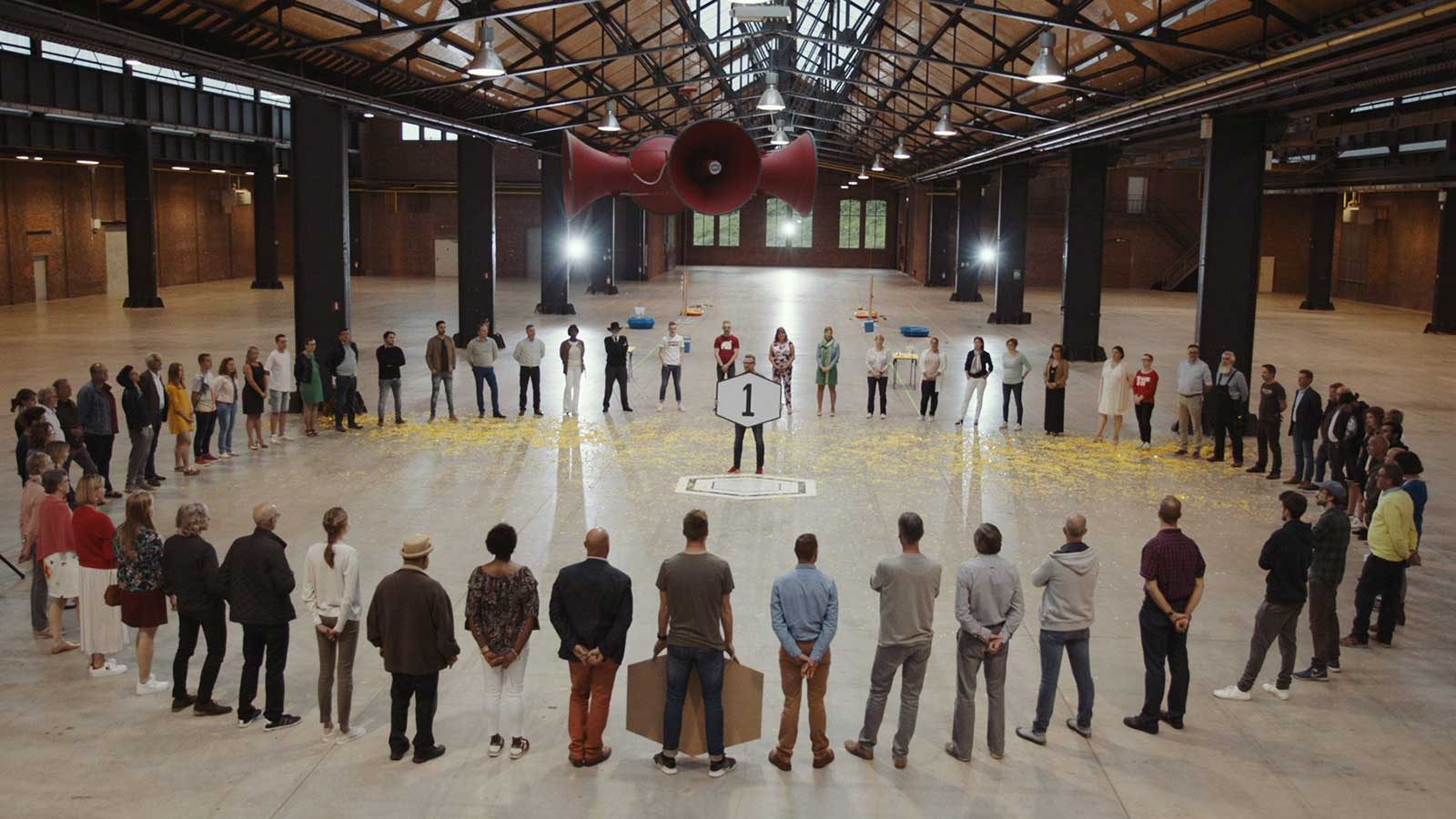
“Actually, a show can start small and become really big. It really depends. Look at The A Talks/The Assembly. It was half an hour in France and it’s sold into more than 20 countries and we’re going to sell it in the US. It’s on ITV. Simone has 99 To Beat. It was a segment in a show. It started on Fox. It’s on ITV. It’s on M6, where it was successful. The thing is not to have the big things, it’s to have the good things, the good idea that can become bigger,” he says.
And I really want that to soak in with you, dear reader – this is what these people do best. This Mipcom, the smartest thing you can do is look in back catalogues for gems. Let’s make more Deal or No Deal Islands please. Van der Goes tells me this is vital for the indies: “You keep reminding people that it’s there, even if they’ve seen it but haven’t had a good look. I always find it funny that you bring a lot of new stuff and sometimes it’s the shows from last year you actually sell.”

Pruyssenaere de la Woestyne
But the other side of this coin is you can actually buy from the indies. “People love going to independent distributors because they know that they will be able to get rights for their territory,” adds Renard.
“There is a whole section of broadcasters and indies out there that want to have the specialist representation we offer without the inherent risks and downsides of working with the groups.” I will praise Curtis from LineUp for this comment, because yes: specialists. No one can be all things and this group of indies know their skills. Perhaps they add scripted formats but they don’t pretend to be all things.
Pruyssenaere de la Woestyne from Primitives sums it up so well when she says: “We want to put our time and effort into it because it’s a hell of a job to get a format sold. We all know that it’s a long process. It usually takes longer than we actually want because patience is sometimes difficult in this game. It might take several years and 99 is an example of that.”
Amen.
Great expectations
I believe the biggest problem in our industry is still expectations – the ‘what is possible’ mindset.

Damien Porte
Van der Goes is immediately there when she says: “Having format owners who all expect their format [to be] sold in 20 territories.” She is trying to be light but it is our daily reality.
Every time Talpa counts up its sales it makes you realise 20 is possible but rare. Yet, in a world short of new formats, and with so many companies clammering for new shows, do you have to over-promise to secure distribution? Porte would say no.
“It would be the worst mistake to oversell yourself to try to get a format, because in the long run that’s shooting bullets into your feet,” he says. “You have to be super transparent with the format owner. As to your results, if a format is successful, it’s because of a particular reason. And if it’s not, it’s the same.”
In the long run, we should all be saying that we are looking for a long-term relationship with a format and not a one-night stand. So Curtis is right to use the strategy where “we’re exploring ever more ways to exploit the IP we represent. For example, we’re growing Long Lost Family’s FAST business from the US into other territories.” A format owner and a distributor need to work together to make passive income for later.

Julian Curtis
Van der Goes takes another step with format owners to ensure future synergies. “I work quite closely with a lot of my clients and if you give your show to a distributor and just wait until the royalty statement come in you know it’s only a cashflow issue,” she says. “But if you are actively involved by bringing their formats to the market, there are also other partnerships being established – whether that’s a co-development or a coproduction or inspiration to do more.”
So if your distributor is not looking for a long-term strategy, then that is a brief fling you can avoid. One thing is for sure: everyone right now is knuckling down to maximise revenues – but how you do that is vital, Porte says.
“Instead of doing one multi-territory deal, we go after every best option in every single market, and there’s this aspect of really maximising each territory,” he says. As a format owner, this may not feel super comfortable as it will not be on the fast timeline and the best partner may not have the fattest wallet.
Lineup is working to grow Long Lost Family’s FAST business
The future of indie distribution
“Business is sometimes challenging and I think nowadays it’s even more challenging than it was 10 or 20 years ago. At the same time, I do think there’s a future – and there has to be a future,” van der Goes says in reply to my big question.
In the wake of low content, mergers and acquisitions, low-risk commissioning and reboots as well as the risk of changes to our business, how are the indies riding the wave?
We have to focus on our strengths and believe we offer a different service – a “concierge” service is how Porte refers to it. That awful word ‘bespoke’ is not mentioned once because we know that nothing is bespoke here – it is learnt behaviour now. We have trained in this.
“Creative concepts are nurtured in different ways to the big companies. And sometimes it’s a smaller format like Naked Travellers [from Can’t Stop], a show with two talents where if that would have been in a bigger company, you know it would have been overshadowed by 10 new loud, big things,” says van der Goes. She’s right, but indies need more than smaller shows to sustain them.
Logically, an independent distributor needs multiple active titles with at least one or two returning hit formats in their catalogue to fund a small team, with what used to be a minimum of four new launches per market. But this has now been lowered to an acceptable two or three.
Then Renard, the spicy one from Can’t Stop, says something that makes us all raise our invisible Star Trek shields: “Sometimes we believe that some indies should merge to create a superindie distributor.” And then he starts naming names!
Part two coming soon, possibly through a Velux near you.