Where could format distribution go from here?
By Siobhan Crawford
01-09-2026
C21’s resident formats expert Siobhan Crawford discusses the knock-on effects of an eight-fold decline in original format commissions and whether the “eerily quiet” distribution space isn’t just a pre-Mipcom calm before the storm but is, in fact, the new normal.
Shall we talk honestly? The format industry is quiet. It has been and continues to be eerily quiet. “We are waiting for London Screenings.” “We are waiting for Mipcom.” “We are waiting to finish our internal restructure.”
Distribution is especially quiet. Normally it is the silence before the Mip bang, but I wonder if it is just the silent decline? At a time where there is an eight-fold decrease in commissioning new content, can the 30% sales commission sustain us as an industry, and does the ecosystem want to keep us? Do we want to care and protect IP anymore? Are we compatible with the rise of content creators and YouTube? Do you remember that episode of Sex & the City where Big is married to Natasha and he tells Carrie, “It’s not working, I’m getting out”? Should that be us now?
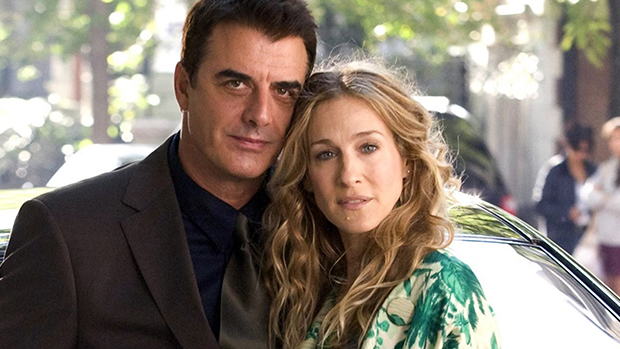
Big issue – is it time for distributors to get out?
Bottom line
Facts about distribution:
• At the very leanest you could run a format distributor with three staff for €350,000 (US$408,000) a year, meaning with a 30% distribution fee you would need to be making €1m minimum in sales to break even.
• The average total format fee from one season of an eight-episode-plus series would be around €65k for a European country.
• Distribution commission is now between 25% and 30% of total deal value, with anther 5% for expenses possible if you stick to the low end.
• As a distributor you need at least one evergreen format that returns and reboots. Fact. You then need to have about four other formats annually that are making money plus €100k options to maintain a staff of about three people. Plus, you need a minimum three or four new formats annually to stay relevant.
• Realistically, you do need a producer attached for the pipeline.
The problems we face
This should all be shocking; it is not – and that is a problem. We are all occupied by the reductions in workforce or ad revenue, or the personnel tsunami that is the M&A landscape. But the current conditions are troublesome.
• Let’s start with unrealistic expectations. If you are saying you commission 14 new shows and you cancel 12 of those, yet you expect your format to be sold worldwide, I think you are being unrealistic. There is a wealth of content for every slot and today only ‘iconic’ gets the commission. Distribution is not a magic bean.
• A distribution company now has to sell all genres for their best chance of survival. This is a fairytale. You can’t do it all; you can be reactive at best.
• You need to stay relevant and to do that you have to have something new at least twice a year and to acquire the distribution of future content you need to sell what you had. It’s a vicious circle.
• We have had to add the word ‘soft’ to formats because of the need of some distributors to have ‘something to sell’ (or pushy producers) that were never meant to go beyond local programming. Drop the fluff.
• In deals today a commissioner wants more rights in exchange for the risk of commissioning. This means longer licence periods and holdbacks, higher runs or unlimited and more exclusions in budget definition. More for them, less for us.
• The time it takes to sell a format and the work it takes to bring it to market and then maintain the quality and invest in the future of it is considerable. It is starting to feel like mega groups can make mega brands because they are the only ones who can bankroll them. Thirty percent – I’m not sure that will cover the six years it may have taken to get the green light.
• Recommissions and low-risk, high-value rebooted formats are in the hands of a few who already have disproportionate power in the industry. This means double seasons commissioned in a year, ‘forced’ new commissions to retain old formats – and fewer slots globally.
• When finances are tight, protecting internal revenue has become vital, and that means conditional commissioning – own-created IP instead of foreign, internal production houses and commissions contingent on internal distributors getting the rights.
• Streamer-based commissioning. Yes, some quotas, but thanks to streamers language barriers are gone and one foreign show can travel to all territories. And if they are the biggest commissioners today and they retain global rights – despite Amazon and Disney attempting to reduce the group grab – is it 5% on foreign versions or consultancy at best? There is nothing that goes back into the ecosystem from them currently.
• The rise of YouTube and content creators. Let’s be honest, no content creators today value or respect IP like the traditional market. None. A ‘thanks’ in the credit is not the same as paying the format fee. And with so much content is there an original idea left? Yet we keep talking about digital first to test so we can move their talent/brand from digital to linear – it’s weird. And they won’t use the old guard of distributors to do this.
• FOMO. Even with 20 years of experience I cannot understand the logic of buying a format for this reason solely, and frankly I hope this bites you in the ass.
Doubling down or getting out
Are there solutions? Bulk content deals for FAST. I’m still not convinced, but L tells me “cruises.crime.creators” content is being hoovered up. Be the studio that has the ability to test digital-first, like SignalStream, which reportedly has US networks offering millions to test ideas on its platforms. Create a universe around a format – do not stop at the linear TV rights, extract and separate all revenue streams and exploit all ancillary. Merge – I believe this would create more powerful indies. Own and manage your own YouTube channels in parallel. Podcasts – apparently everyone is doing it and this is the new literary adaption. Or you sit quietly and think wider, broader.
I ask you to consider what you saw at the London Screenings this year (keeping in mind this is predominantly the bigger players and studios), and that showed us many paper developments. Now consider what you spent this year on format fees. Divide it by the number of distributors you work with. Not much, right? Now, remember that you started to partner with content creators who develop ‘original content.’ Is it possible that some of you went a whole year producing talent-based content without actually buying a format?
If distributors are the last bastions of IP commercialisation, when we fall, will it be a free-for-all? Because the currency of our industry – IP value – is being eroded from all sides. Can we pivot and save it, but more importantly, do we want to?
I think we are now moving in only one direction. If we talk about the decline of linear TV, did it start with distribution?
Yeah. Welcome back to Formatland. PIVOT. EXPAND.