Liberating or limiting? Aardman's Sarah Cox on AI in animation
By Sarah Cox
09-12-2025
Aardman’s chief creative director Sarah Cox discusses how generative AI will likely limit the opportunities for new animators to gain professional experience and how the Wallace & Gromit prodco is working to equip the next generation of animation talent with the ‘magical balance’ of technological and traditional skills.
In our most recent film, Wallace & Gromit: Vengeance Most Fowl (2024), the malevolent interference from a certain penguin via a robotic garden gnome ensures everything goes wrong before it goes right. But as Wallace says to Gromit in the final act: “I knew you’d embrace technology in the end.”
We do at Aardman embrace all sorts of technology and we use it to help us do what we love: making funny, hand-crafted, character-driven animated films. While we don’t use Generative AI to produce content, we are early and enthusiastic adopters of a range of emerging digital technologies that we incorporate into our production pipelines.
We innovate in so many ways: to design and construct armatures, to plan camera moves, to create digital and practical VFX. We use 3D printing to aid character design and lip sync and numerous other applications. We have such an incredibly talented team who love to invent and creatively engage with new approaches, and their experience with traditional hand-crafted animation techniques – combined with these digital techniques – creates incredibly exciting animation that retains the resonance and charm in our films that our audiences love.
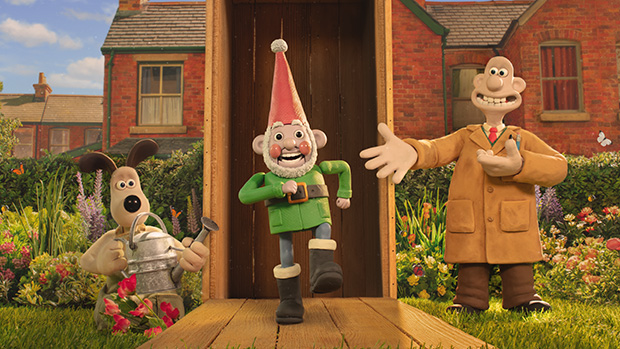
Wallace & Gromit: Vengeance Most Fowl
When I think about how I and many of my colleagues started out, we transitioned from student filmmaking to the professional animation industry through a plethora of entry level roles and semi-commercial opportunities – art working, inbetweening, storyboarding, creating idents, title sequences, music videos, educational and health shorts. These labour intensive yet skilled roles allowed for young creatives to get commercial experience, learn from others in the industry and hone bespoke crafts.
The widespread adoption of Generative AI is likely to replace the need for traditional animation in many of these areas and therefore the opportunities to get professional experience including first directing roles will be increasingly difficult to achieve.
At Aardman, in stop-frame animation in particular, we still have so many needs for talented newcomers with traditional analogue skills in animation, art, puppets, lighting and set design. We seek out talent with a good artistic sensibility, dexterity and capability – who can understand colour, form, light, structure and materials. It is so helpful when people have ‘on-set’ experience and know how to work as part of a team.
Looking ahead, there is a growing concern that the opportunity to develop these skills in a professional capacity might be less accessible for our future crew.
So how can we equip our next generation of animation talent with the magical balance of technological and traditional skills our industry and our audience demand?
The good news is there is a strong desire in both viewers and makers of animation to see human input and feel and work with real materials. This is not just true for stop-frame animation but the broader animation industry, including CGI and 2D and encompassing pre-production, design, story, music and sound. The enthusiasm is evident; we just need to ensure the opportunities are available.
We have seen the global take-up for our Aardman Academy stop-motion courses grow exponentially and have welcomed more than 900-plus participants since 2013. Many of its alumni now work at Aardman and other animation studios all over the world. We also partner with universities to help bolster practical and on-set skills, and hold very popular puppet and animation workshops at schools, festivals and public events.
There are still a great number of very good practical animation university courses that incorporate stop-frame practise such as NFTS, RCA, Teesside, UWE Bristol and Arts University Bournemouth, but with growing student numbers on each course the access to professional kit and on-set experience may be increasingly difficult to maintain into the future. Many of the students make short films and when they graduate, they need a platform to showcase their work. This is where animation festivals such as Encounters, Cardiff and Manchester Animation Festival play such a key intersectional role between the industry and students. It is critical we in the industry make the effort to support and attend these events and meet, speak, engage with and encourage the filmmakers, designers and producers involved.
The next step on the career path for a graduate with a great animated short probably requires a combination of self-motivation, hard work and further help from the industry. BFI, BAFTA and Screen Skills provide great support through film funding, paid bursaries, mentoring and networking schemes, but ultimately, it’s up to the animation studios to take a chance on new talent and champion and maintain traditional skillsets alongside innovating with digital technology.
We are born creative and children naturally want to draw, tell stories and make things with their hands. We need to inspire children to see there are careers in animation where they can continue to be creative. We can partner with schools, colleges and universities and stress the importance of core creative, design and practical skills, because once armed with these a creative brain can adapt and thrive on anything new technology can throw at us. If we don’t adapt, we risk the creative integrity and sustainability of the animation industry.
To give the last word to Wallace before he gives Gromit a loving pat: “There’s some things a machine just can’t do, eh, lad?”