Pélisson: Europe needs 'champions' to rival US streamers
By Louise Bateman 04/09/2026
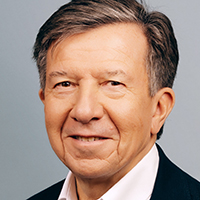
Re-elected for a second term, Unifrance president Gilles Pélisson talks about the difficult market for French exports, the imbalance in streamer carriage deals and why data transparency is now his priority.
Gilles Pélisson knew his second term as president of Unifrance, secured in a re-election earlier this summer, would be shaped as much by upheaval in the global media landscape as by the organisation’s traditional work of promoting French film and TV abroad.
Having taken the role in 2023, Pélisson arrived with a clear ambition: to unify cinema and audiovisual promotion under one roof and ensure France continued to “hunt as a group,” projecting a stronger, more unified presence internationally. That first mandate is largely complete, says the former TF1 Group boss. “All the people participating in the [French] media industry and content industry realise that they can, from now on, go from one to another, and that there are really fewer and fewer walls between them and more and more bridges,” he says.
Initiatives such as Rendez-Vous in Paris, the annual January event which last year brought film and TV sellers together for the first time, and Club Unifrance, the pop-up spaces and media hubs Unifrance runs at festivals such as Cannes and the Berlinale to maximise coverage for French productions, point to this stronger, unifying purpose. This November, Unifrance will add Séries Express, a travelling festival that uses the train rather than planes to promote French series across Europe, stopping in Brussels and Amsterdam for its first edition with four French series yet to launch in either territory.
On his re-election, Pélisson said: “Building on the progress we have made together, I am looking ahead to our future – with some certainties but also many unknowns.”
Those unknowns, he explains, are the increasingly complicated circumstances now facing French cinema and television.
Looming large are France’s 2025 audiovisual export figures, to be unveiled officially at Unifrance’s Rendez-Vous in Le Havre next week. Sales stayed above the symbolic €200m (US$231m) mark in 2024, despite what Pélisson concedes was already a difficult market, but 2025 is expected to show a decline.
Pélisson points to several pressures facing the French industry at once that are impacting its exports. When broadcasters order less content, he says, the whole production ecosystem feels the strain – and as advertising money migrates to streamers and digital platforms, the free-to-air channels that have historically anchored French TV production lose their financial footing. “Our public broadcaster, France Télévisions, is itself under pressure in terms of financing,” he notes. “If they order less content, it impacts a lot of the players in the French industry.”
Added to that is the wider economic picture. “The finances of France as a country are under very heavy pressure,” Pélisson says. Public funding from the Centre National du Cinéma et de l’Image Animée (CNC) and the French Ministry for Europe and Foreign Affairs provides the bulk of Unifrance’s budget, and while Pélisson introduced a private-partnership fund during his first term – bringing in names such as Accor and BNP Paribas – the reliance on public money means the organisation’s funding inevitably faces uncertainty. “We hope it will stay as it is, but everybody is under a lot of pressure,” he says.
The financial squeeze is only part of the challenge, however. The deeper structural shift, Pélisson argues, is the rise of the streaming giants. He welcomes TF1’s carriage agreement with Netflix and France Télévisions’ arrival on Prime Video as necessary adaptations by broadcasters who “can’t survive on their own.”

Netflix’s 2025 Astérix series from Légende Films
“The free-to-air channels have no choice but to challenge themselves and their existing models,” he says. But he is under no illusions about the imbalance in these arrangements. Advertising revenue on streaming platforms remains modest, meaning the amount to be shared between broadcasters such as TF1, M6 or France Télévisions and any streamer is slim. “It may develop, but so far it’s fairly tiny,” he says.
What concerns Pélisson more is a question of data and value. The streaming giants, he argues, are distorting the picture of how French content performs internationally. “The data is produced, and kept, mostly by the platforms, which already creates an imbalance in value creation,” he says.
When a high-profile French production is commissioned and distributed by a global streamer, the sales figures do not appear in any publicly accessible accounting. He cites the 2025 Astérix series, produced for Netflix by Alain Goldman’s Légende Films in partnership with publisher Hachette’s Les Éditions Albert René. “This series is part of the French creation in the animation world, but because it is produced and distributed on Netflix, we don’t know how it has sold, so to speak, abroad. We know the production value, but not the real impact,” he explains.
That opacity may understate the true reach of French content abroad, says Pélisson, who is pushing for greater transparency. “I’m a big believer that the more sharing of data there can be, the better we will all be,” he says. The streamers, he acknowledges, are beginning to engage with the idea, but progress is slow. “All the streamers are very aware of that,” he says. “I think it’s going to be part of the industry’s evolution in future years; there is a common good here, and it has to be shared at some point.”
The international distribution market is consolidating too. This summer, France’s Banijay and the UK’s All3Media completed a US$8bn merger, creating one of the largest independent content companies in the world. Pélisson supports the deal. Unifrance, which represents more than 1,000 French distributors, producers, creators and talent, welcomes “everybody,” he says, regardless of scale.
“We need champions,” he adds, pointing to the scale of consolidation in China and the US. “It’s very important, and if we can have some more French champions, we will be happy.” European reluctance to build large players, he suggests, may be self-defeating. “Are we shooting ourselves in the foot?” he asks.
That question sits behind French president Emmanuel Macron’s decision to convene the Lumière Summit, a one-day gathering of politicians and global entertainment executives on September 7 in the hilltop village of Saint-Paul-de-Vence in the South of France.
Co-chaired with South Korean president Lee Jae Myung, the summit is expected to draw the likes of Netflix’s Ted Sarandos, Sony Pictures Motion Picture Group’s Tom Rothman, Canal+ Group’s Maxime Saada and Mediawan’s Pierre-Antoine Capton, among others, to discuss the challenges facing cinema and moving image, including the impact of AI. The Élysée Palace has billed it as a chance to showcase “France’s ever-renewed attractiveness in the fields of film, television series, animation and video games.”
Pélisson sees the summit as consistent with the moment, even though it clashes with Unifrance’s own Rendez-Vous in Le Havre, which also opens on September 7. “In a world of consolidation, of vertical integration from large content [players], and what we see from the streamers and the tech world – the hyperscalers – you need to have some kind of protection in Europe,” he says.
Pélisson acknowledges that the French model of creative financing has its domestic critics but believes it should be defended and adapted rather than dismantled. “This is what Gaëtan Buel, the president of the CNC, is fighting for,” he says, “trying to demonstrate that the rest of the world most of the time envies us in terms of financing and creativity, and in facilitating a diversity of content that really makes France fairly unique.”
Pélisson remains bullish about French creative talent. “I am very confident in the talent, the schools and the various parts of our industry,” he says.
The export figures due next week may make for sober reading, and the pressures bearing down on French producers, distributors and broadcasters show no sign of easing. But Pélisson’s argument is clear: adapt to the new market conditions and protect what makes great French content possible and the content, he is convinced, will keep finding its market abroad.