Pit Pats offers slow TV for wound-up kids
By Karolina Kaminska 07/09/2026
Overstimulation is a growing concern among child psychologists, media researchers and parents, worried that children’s TV is engineered for dopamine hits. C21 explores how slower-paced programmes are becoming hot properties.
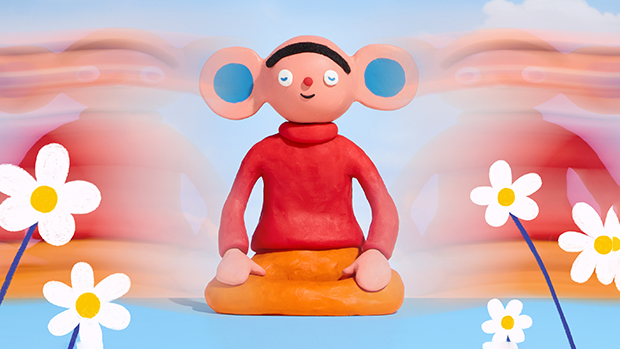
Pit Pats aims to encourage ‘calm, curiosity and imaginative play’
After struggling to find suitable programming for their preschooler in the mass of high-stimulation, fast-paced, ‘sugar-rush’ content that is now available online, Australian parents Darcy Prendergast and Josie Mackerras decided to make their own show.
Pit Pats, which launched on YouTube last month under its Made for Kids banner, is a low-stimulation series that aims to relax and centre children through gentle, calming episodes focused on mindfulness and nature. It was developed and produced through the Australian Children’s Television Foundation (ACTF) and Screen Australia’s Kids IP Incubator.
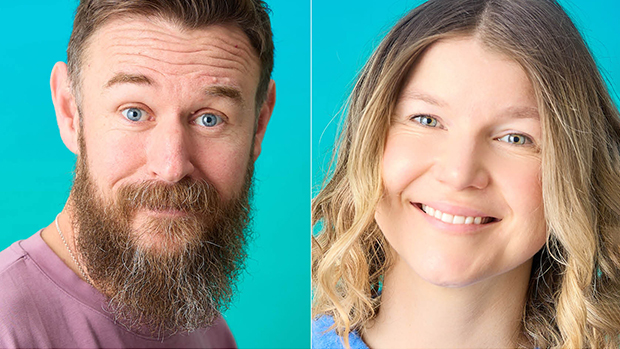
Josie Mackerras and Darcy Prendergast
The move comes amid growing concern among child psychologists, media researchers and content creators – not to mention parents – about how modern children’s media is engineered to deliver as many dopamine hits as possible, through hyper-pacing, saturated neon colours, flashing lights and intense, continuous sound effects.
The result is certainly effective in retaining children’s attention, and this hyper-engagement increases watch time and viewership metrics. However, critics argue this creates a form of ‘forced attention’ where the child is not engaging creatively, but is instead locked in a passive state of physiological hyper-arousal, which isn’t good for the development of young minds.
At the time of its launch last month, the ACTF’s head of content Bernadette O’Mahony praised Pit Pats for “creating space for calm, curiosity and imaginative play at a time when children are inundated by overstimulating, fast-paced content.”
The mixed-media series combines clay animation, hand-drawn animation, puppetry and live-action, with episodes being uploaded to YouTube weekly. The slow-paced nature of Pit Pats is perfectly exemplified in the first episode, which focuses on a breathing exercise and features footage of grass growing.

Pit Pats mixes claymation, hand drawing, puppetry and live-action
“You’re literally watching grass grow, one frame at a time,” Mackerras says when the first episode launched. “We popped our little clay character in a tub of dirt, planted some grass seeds and once they started to sprout, manually took a photo every hour, even throughout the night. The idea being that as the character breathes in deep, the grass grows tall and upon exhale, it recedes back into the earth. All up, it took about a week to get the shot.”
Mackerras and Prendergast wanted to create a gentle preschool show after finding their child was sensitive to high-stimulation content and “dysregulated” by strobing colours, fast edits and loud music.
“Pit Pats was kind of created out of necessity, as we couldn’t really find suitable content for our sensitive little one. She’d be shot to the moon by fast edits, loud music, flashing colours and then just be an overstimulated mess by the episode’s end,” Mackerras tells C21.
“So we set out to create a slow TV show for kids, a point of difference to the ‘sugar-rush’ content that’s become so prevalent in the online space. Think breathing exercises, meditations, gentle movement – a plate of veggies rather than cotton candy.
“But then there’s also how we visually approach that, because slow doesn’t have to equal boring. To create that familiarity for kids, we’re entirely handmade: cross-pollinating clay animation, hand-drawn animation and puppetry. Then we spent a lot of time in the backyard or in the bush with a macro lens on, mainly following ladybirds around, but we did also befriend a wild wombat a few weeks ago.
“Ultimately, we ideally want to inspire kids to wield some plasticine, harness their breath and explore nature after an episode is done,” she says.
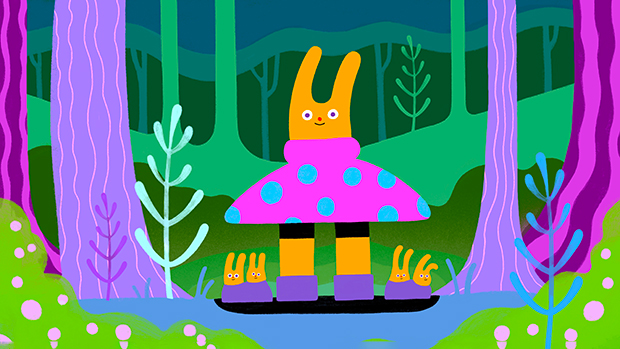
Pit Pats’ gentle, handcrafted characters include Bun Bun
Slower-paced, thoughtful and beautifully crafted programming for children does, of course, already exist in the market, but finding it among the vast amount of low-quality, high-stimulation content on platforms like YouTube is becoming increasingly difficult.
“The algorithm rewards retention, so it’s recommending content based on the dips and spikes of a graph, not the social, emotional or educational value of a show,” Prendergast says. “The truth is, it’s much easier to engage kids when you can pull the levers of loud music, flashing colours and fast cuts. So therein lies the challenge for us: how do we reach the parents who are crying out for change, in the age of dopaminergic content?”
Prendergast adds that a desire from parents for nutritional content “doesn’t necessarily mean everything has to be slow,” but points out that the content that is “best optimised for engagement generally isn’t the best for the healthy development of kids.”
“The growing body of research is pretty worrying for us as parents. Constant sensory overload can impair executive functions and lower a child’s frustration tolerance, making real-life activities like reading or imaginary play feel pretty dull by comparison,” he says.
Mackerras and Prendergast, who launched Pit Pats just last month, admit they “have no idea how we’ll fare out there in this flashy new world,” but are hopeful there are other parents who are “as passionate about slower screen alternatives as us.”