Trump's 'nothing burger' leaves a sour aftertaste
By Jordan Pinto 25/11/2025
The initial shock of Trump’s plan to tariff global production has dissipated, but some markets, including Canada, are nervously waiting for another shoe to drop amid a broader trade war.
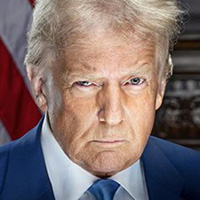
Every year there are countless “seismic” industry stories that cause a huge stir before promptly amounting to nothing. At the top of the list in 2025 was Donald Trump’s pledge for the US to impose tariffs on films shot outside America.
The US president sent the global production sector into a collective meltdown in early May with a Truth Social post in which he vowed to impose 100% tariffs on films coming into the US market that had been “produced in foreign lands.”
The claim, however vague, had panicked industry executives frantically trying to make sense of what Trump might have been envisioning, or how such a preposterous scheme could be implemented. Their time might have been better spent on other things, as it fairly quickly became apparent there was little logic belying Trump’s tariff proposal.
The social media posts, it later emerged, were based on conversations with actor Jon Voight, who leads a three-headed, Trump-appointed taskforce installed to “make Hollywood great again.”
Fast forward seven months (and one more Truth Social post) and the fear of the tariff threat has almost entirely dissipated within the US industry.
When asked by C21 if there remained any sense of uncertainty caused by the tariff threat, one US-based executive who works extensively in the international market simply says: “Business as usual. No effect.”
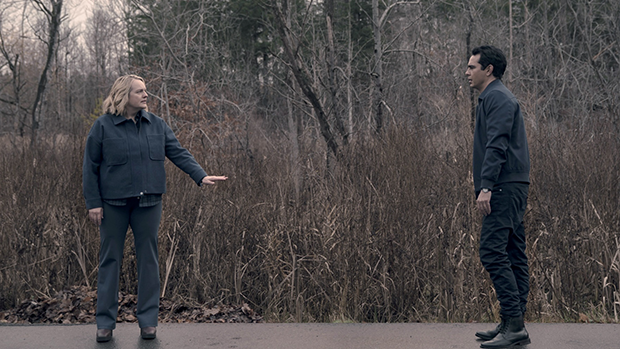
Hulu’s The Handmaid’s Tale was filmed in Canada
But that is definitively not the case across the board. In fact, the tariff threat – which has been described repeatedly as a “nothing burger” – appears to have given some international markets a mild case of food poisoning. None more so than neighbouring Canada.
“Everyone made fun of Trump and tariffs, but if anyone thinks the president of the United States doesn’t have tools at his disposal to punish the [international] industry, I don’t know what world they’re living in,” one top Canadian production source tells C21.
At the time the tariff conversation was first introduced, much of the narrative revolved around TV shows being a service, not a good, and therefore falling outside the jurisdiction of what can be tariffed. That is still true but misses the point, says the source, who emphatically dismisses any notion that Trump’s two social media posts are simply random outbursts.
“There’s nothing random about the Truth Social posts. He uses the term ‘tariff’ but we should stop focusing on whether a tariff will or won’t work in the film industry. The question is: can he inflict damage on our industry? The answer: yes he can. Whether it’s through a tariff or some other monetary or fiscal policy, he has tools at his disposal that can create issues for our industry.”
For Canada, the issue is perhaps more complex than for other global production centres like the UK or Australia. The main reason being that Canada is still in the midst of complex, at-times ugly trade negotiations with the US that could spring up all manner of surprises as renegotiation talks for the Canada-United States-Mexico Agreement (CUSMA) begin in summer 2026.

Jason Mamoa stars in Apple TV’s See
Of utmost concern to the Canadian television sector is that the Online Streaming Act (OSA), which aims to regulate foreign-based streamers and make them pay into the local system, will be scrapped in the context of these broader CUSMA talks. Given the importance placed on OSA in supporting the future of the Canadian content business – and the fact it took the best part of 10 years to be passed into law – to see it abandoned is an almost unthinkable outcome for the Canadian production sector. Chillingly, however, that is beginning to become a prospect.
Sources have told C21 that senior government officials on both sides of the border have described OSA as a “major irritant in the trade negotiations.”
Canada’s broadcast regulator, the Canadian Radio-television & Telecommunications Commission (CRTC), has undertaken several industry consultations over the past year to solicit feedback on how best to implement OSA. Those consultations have included discussions on everything from what qualifies as “Canadian content” to what kinds of contribution requirements should be imposed on the US-based streaming services operating in Canada.
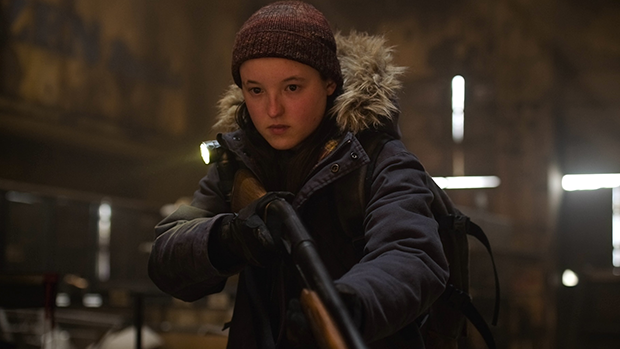
Global sensation The Last of Us
The CRTC recently released a detailed decision on the new definition of Canadian content, and it is believed it might be in a position to soon release another ruling on how foreign-based streamers must contribute to the local ecosystem. However, C21 understands that some within the industry feel that would be unwise, with some even approaching the government to urge a pause on any CRTC decision that could enrage the Trump administration, thus putting a bullseye on OSA.
“If they were to issue a decision that has an aggressive position on the [US] streamers having to contribute to the Canadian industry, some could view that as a shot,” says the production source.
There is also a growing belief that Canada’s service production sector – which sees US studios shoot billions worth of shows and movies every year across Canada, tapping into generous tax credits across the country – could get caught up in the trade negotiations.
Notable American series to have filmed in Canada in the last few years include Hulu’s The Handmaid’s Tale, HBO’s The Last of Us and Apple TV’s See. However, such shows appear to be in Trump’s crosshairs, given his comments about stemming runaway production and repatriating American productions.
“To what extent could [service production] factor into trade negotiations. Who knows?,” says another senior source. “Because it’s a mystery to us – and maybe still to him – what retaliatory action he could concretely take. I know there are certain theories out there about what could be done to pressure the studios and streamers to bring production back, so that’s another factor in all of this.”
If US productions are penalised for shooting abroad, it would impact the UK sector too. However, US studios have signalled they are not massively concerned about this, opting to move most of Marvel Studios’ film production from Atlanta, Georgia to London over the summer. “Canada is more vulnerable because of the nature of our interlinked industry with the US,” says another exec, also speaking on background.
The outcome of these US/Canada trade talks could completely transform the Canadian production sector – and not necessarily in positive ways. But there remains a belief within the Canadian sector that the survival of OSA and the continuation of a robust service production industry can be achieved.
Outside of the Canada-specific issues, one potential positive outcome would be a move from the US towards implementing a federal tax credit, or the creation of coproduction treaties, both of which were key components of Voight’s plan. None of these proposals have gained meaningful traction thus far, however, and it is unclear whether they will.
In the meantime, the tension is causing paranoia levels to run high in Canada – even when the industry is receiving good news. In early November, as part of its federal budget, the government gave major funding boosts to several cultural institutions. Among them, TV funder the Canada Media Fund received an additional C$127.5m over the next three years and film funder Telefilm an extra C$150m over the same time period. Meanwhile, CBC/Radio-Canada received an additional C$150m for fiscal year 2025/26.
Ordinarily this would be considered as sensational news, but the enthusiasm is tinged with a lingering question: is the Canadian government giving more funding to TV and film organisations because it knows OSA will be a sacrificial lamb as part of wider trade talks? On that front, opinion is divided.
Some who C21 has spoken with feel that is likely the case. Others say it is too early to tell or, more optimistically, that it’s a sign Canadian prime minister Mark Carney is serious about supporting the country’s screen sector. For the moment, though, it is a lifeline for Canadian producers at a time when the rug could get pulled out from underneath them.
As one source tells C21: “We don’t know what’s going to happen in these trade negotiations. For that reason alone, having this level of stability and predictability for the next three years is critically important. It will help, just given the general stress levels in the industry right now.”