The sweet spot of Colombian coproduction
By Sebastian Torterola 09/01/2026
Companies from Spain, Mexico and Turkey are already finalising coproductions with Colombia, which is opening up to the world through incentives, talent and “numbers that add up.”
Colombia does not have the demographic levels of Brazil or Mexico. Nor are its 50 million people enough to constitute a self-sufficient market. So why are more international companies coming to the country to coproduce?
Several factors explain this phenomenon. One is that it offers a favourable environment for bringing stories to life, both in terms of talent and technical sophistication. But there is another reason: in Colombia, the numbers add up.
In fact, along with Brazil’s Senna and Argentina’s El Eternauta, Colombia is home to one of the most ambitious series in the history of Netflix in Latin America: One Hundred Years of Solitude, which is estimated to have cost $50m and required the construction from scratch of Macondo, the town where the adaptation of Gabriel García Márquez’s iconic work takes place.
“Four versions of Macondo were made,” says Diego Ramírez Schrempp, a partner at Colombian production company Dynamo, which is currently filming its second season. ‘Eleven thousand candidates showed up for the casting and we have 1,000 people working on set. In total, 100,000 pieces of clothing were produced. Post-production for the first season took a year. It’s a huge process.’
With offices in Mexico and Spain and a recent partnership with former Apple TV+ executive Carol Trussell and former The North Road Company executive Kristin Jones for international projects, Dynamo is one of the Colombian production companies that is best leveraging the country’s position to expand beyond its borders.
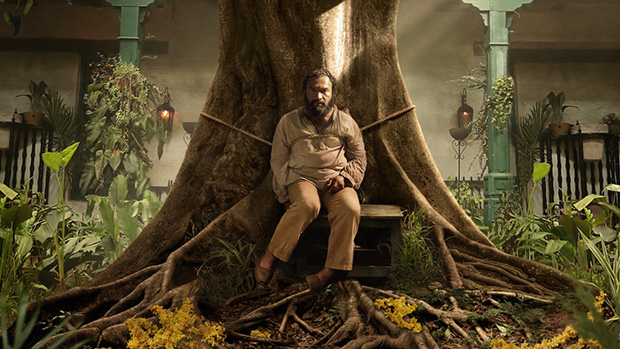
A second season of 100 Years of Solitude is in production
Netflix
But it is not the only one, as demonstrated by Perrenque Media Lab, with expansion into Puerto Rico; Jaguar Bite, with offices in Mexico; Fidelio Films, with a presence in Canada, Mexico, and Switzerland; TIS Studios, with facilities in Mexico and the United States; and Miracol, which has also arrived in Mexico.
“Colombia’s visionary incentives make it a very important country in the region in terms of production, not only in terms of volume and investment, but also artistically. In the configuration of new business models that we are seeing in the market, coproduction is natural and necessary,” says Ana Barreto, CEO of CMO Producciones, responsible for hits such as La Venganza de Analía and Pálpito and also active in production services.
Pedro Dávila, CEO of Miracol, points out that Colombia has many competitive advantages over other countries, including economic ones. “I have taken the scripts for a series and quoted for its production in Colombia and Mexico. The result: almost 30% cheaper in Colombia, without even considering rebates. If you add incentives to that, it becomes up to 50% cheaper and with the same quality.”
Recognised for providing production services to entertainment formats such as Big Brother Colombia, Iron Chef: Mexico and Sueño fútbol, Miracol has taken off in fiction originals with the Colombian series Secuestro del vuelo 601, which reached the top 10 on Netflix in multiple territories in 2024.
This has led her to crystallise Colombia’s international momentum in a major coproduction currently in development: the biopic Chavela, about legendary Mexican singer Chavela Vargas, which she first announced alongside Caracol Televisión and later added a major international partner, Spain’s Shine Iberia.
“It ended up as an international coproduction: Shine Iberia took Spain, we have the rest of the world and Caracol got involved in financing as a studio. It’s the sweet spot of a coproduction model that allows us to retain IP, have creative involvement, and access independent financing with two initial screens, Mexico and Spain,” explains Dávila.
But Chavela is far from being an isolated case for Colombia in terms of international TV coproduction, as demonstrated by the recently announced biopic Aquel.
Based on the life of iconic Spanish singer Raphael, the series is a coproduction between Caracol Televisión and Spain’s DLO Producciones (part of Banijay Iberia), which has already been acquired for some territories by Netflix. Once that first window is complete, Caracol will distribute it internationally.
The fictional film La Corona, based on the award-winning documentary of the same name released on HBO in 2008, has also brought together Colombian players such as Black Sheep Productions with international players such as Startling, Infinity Hill and Runaway Films, as well as the Spanish studio Secuoya Studios.
Secuoya Studios, which produced the upcoming miniseries Los 39 in Colombia about the 39 men Christopher Columbus abandoned on the island of Hispaniola in 1492, is joined by Spain’s The Mediapro Studio, which has a local unit led by Catalina Porto that is constantly seeking coproduction opportunities.
The signing of a film and audiovisual coproduction agreement between Colombia and Spain, announced in July during the Bogotá Audiovisual Market (BAM), could further strengthen ties between the two countries. It is expected that other territories will begin to join Mexico and Spain more regularly, as Turkey and Brazil have already done.
The first is the Turkish drama Leylifer, a partnership between Caracol and Inter Medya for the international market, which both partners hope to replicate with new titles.
Bridges with Brazil, meanwhile, includes a memorandum of understanding between the audiovisual promotion entities Spcine (São Paulo) and Proimágenes Colombia, presented at the latest edition of BAM, to strengthen production links between the two territories.
In terms of stories, Colombian producers point out that none of these international coproduction projects currently have anything to do with drug traffickers.
Although there was a huge international wave of Colombian content marked by television series linked to drug trafficking themes, such as El Capo (Fox Telecolombia for RCN), La Reina del Sur (RTI Televisión/Telemundo) and Pablo Escobar: El Patrón del Mal (Caracol), today the country is seeking to shake off that image in the audiovisual sphere as well.
“Initially, in the neorealist structure of telling our story as a country, we had to delve deeply into the world of drug trafficking. But today we are very pleased to see that other types of Colombian narratives are emerging, which allows us to shake off our international image,” says Samuel Duque, president of TIS Studios.
“Since Narcos, the trend has been to show favelas, poverty, and nature, third-world landscapes that could be either South American or Indonesian. But today we can see that the focus has expanded and the themes, look, and locations in Colombia have diversified,” agrees Nicolás Martínez, partner at Perrenque Media Lab, a production company based in Bogotá and San Juan, Puerto Rico, which combines the development of original projects with production services for global partners.
With the combination of incentives, low costs, and years of validation by US media corporations, everything points to Colombia no longer being just an attractive destination, but an essential and reliable cog in the machinery of international production.