Nothing can grow without finance, says Crea SGR chief
Responsible for up to 80% of the financing for Spanish films and series, it is impossible to understand the boom in Spanish content without Crea SGR, which continues to seek to expand its model to Latin America.
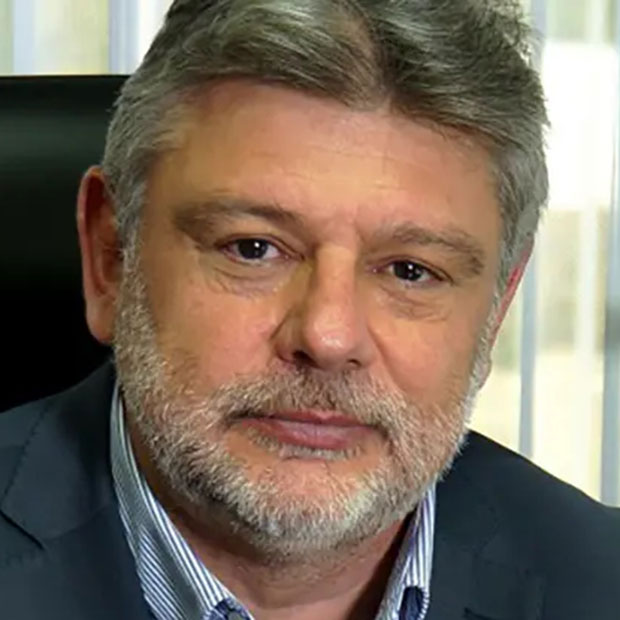
According to Rafael Lambea, CEO of Madrid-based cultural funding agency Crea SGR, no industry can thrive without access to finance. This applies to any sector, from commerce to manufacturing to technology.
And that has been the main challenge that the audiovisual industry has historically faced, in Spain, in Latin America and the rest of the world. “The problem of financing is universal: any producer, wherever they are from, faces a problem when they need to finance themselves,” Lambea tells C21’s Spanish-language sister publication Cveintiuno.
According to the executive, there are two reasons for this: on the one hand, banks do not usually see the audiovisual sector as a “serious” industry. And, on the other hand, production companies are usually small companies that need to make huge investments, which increases the “riskiness” of these operations in the eyes of the banks.
“Traditional banks are lagging behind in their understanding of this sector, and this is true both in Spain and in Latin America. They don’t quite believe that this is serious, that this is a real business,” he laments.
Crea SGR, founded in 2006, was designed precisely to find a solution to this dilemma. Created as a public-private partnership between the Ministry of Culture and Egeda, the rights management entity for audiovisual producers in Latin America, Crea SGR is a mutual guarantee society that guarantees the loans that Spanish production companies need to get their productions off the ground to private banks.
This guarantee is possible thanks to Crea’s own fund, which has the capacity to guarantee up to €500m (US$583m) per year. In general, Crea SGR guarantees loans that advance the future income of production companies from contracts or tax incentives to be collected. On average, its operations tend to be around €1.5m.

Spanish comedy Padre no Hay Más que Uno
According to Lambea, the money is lent by banks at low interest rates, given the security of the operation, and Crea keeps a commission that goes toward increasing its own fund. The model has been so successful that today Crea SGR is involved in almost 80% of Spanish films and series and has backed operations worth almost €2bn in its 20 years of existence.
In fact, 2024 was the best year for the company, whose projections indicate that 2025 will be even better.
“2024 was Crea SGR’s best year. We have exceeded all the volumes of guarantees granted. We are already close to an 80% share of Spanish film production, and we are beginning to have an increasing percentage in television,” says Lambea, who explains that Crea SGR has increased its share of the funding of television programmes by 40% and that, currently, its guarantees are divided between 70% for film and 30% for TV.
According to Lambea, two factors are driving this growth: firstly, the measures taken by Spain in relation to the audiovisual sector, which, through regulations and aggressive tax incentives, “is now taking the audiovisual industry seriously.” Secondly, it’s filling the vacuum created by the aforementioned lack of understanding of the sector on the part of banks.
“Traditional banks still understand practically nothing about what we do. They don’t understand how content is paid for or how it’s structured, and that gives us a competitive advantage, because we’re becoming almost the fundamental financial element for any production.”
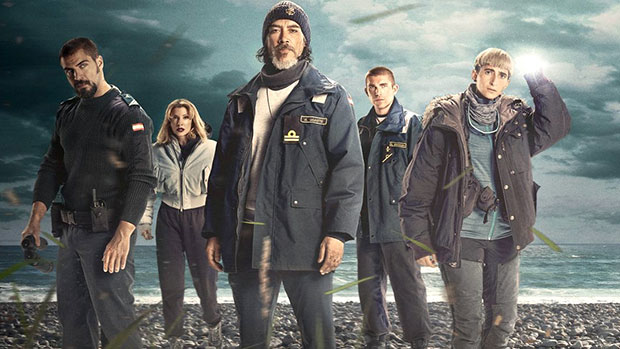
Punto Nemo aired on Prime Video
“And we give the banks everything already processed and a guarantee that they will get paid. The banks have quickly become accustomed to this, and have not taken the logical step of realising there is an industry from which they can directly profit from,” he adds.
This has made Crea a key player for the Spanish audiovisual sector, argues Lambea. “For any sector, whether it’s commerce, hospitality or whatever, having your own financial institution dedicated exclusively to you is a luxury,” he says.
Series or films such as Punto Nemo (Prime Video), the Padre no Hay Más que Uno saga (Prime Video) or the recent Cannes winner Sirāt are just a few examples of titles in which Crea SGR has been involved.
Regulated by the Bank of Spain and with funds provided mainly by the Spanish public administration, Crea SGR is nevertheless limited to only being able to guarantee Spanish companies, despite the fact that Egeda is present throughout Latin America.
This, added to the fact that there are no similar entities in Latin America, is limiting the growth that the Latin American audiovisual sector could be experiencing, according to Lambea. “Many Latin American countries are in the same phase that Spain was in 20 years ago with regard to audiovisual financing: neither the public administration nor the banks have understood the problem.”
That is why one of Crea SGR’s “great battles” is to expand its operations to Latin America, he reveals. “It is a battle that we have not yet given up on. The idea is there, and Egeda is very committed to making it happen, because there is impressive potential in Latin America, but the public administrations need to believe in it and take the step that we took here.”
Lambea refers, on the one hand, to the creation of the mutual guarantee society mechanism and, on the other, to the million-dollar contribution to its fund that the Spanish Ministry of Culture made and continues to make. “That’s the part that South American countries are missing: taking the step of investing a certain amount of money and creating a similar society to replicate this model and provide coverage for the audiovisual sector.”
“Because it is impossible for a sector to grow without funding,” he says.
In Spain, however, Crea SGR’s operation is not without its challenges, with the meteoric rise in budgets being one of the main difficulties the entity is facing.
“We have gone from €300,000, €400,000 or €500,000 per episode in a series to investments of between two and three million euros per episode. It’s outrageous,” says Lambea, who explains that the current size of Crea SGR’s fund limits the number of productions it can guarantee.
That is why, he adds, the entity is having to reject shoots with budgets of €60m or €80m. “In order to guarantee these operations, I would need to have very high resources behind me, of course. So, we are in a battle to raise more funds, because our capacity to provide guarantees is already falling short. And that is where the administration is struggling.”
Crea SGR’s funds consist mainly of public investments, contributions from Egeda, and the commissions they charge for each operation, which are almost entirely returned to the fund as it is a non-profit entity.
But without new resources, Spain’s ability to attract international productions will be limited. “This has become a flea market. Now you have Hungary, Poland, Ireland, New Zealand… There are countries with impressive facilities when it comes to accepting international productions,” he warns.