Kate Marks on Ausfilm's European tour
Following a London reception and a major presence at Annecy’s animation market, Ausfilm CEO Kate Marks talks about how international partners can work with Australian content companies, the incentives on offer and what watching the streamer quota debate might mean for producers down under.
Australian screen body Ausfilm has had a busy few weeks. Earlier this month it hosted a cocktail reception in London to mark the launch of Partner With Australia (UK), a joint initiative with Screen Australia designed to deepen ties between the Australian and UK screen industries. It then led a delegation of more than 40 animation companies and practitioners to the Annecy International Animation Film Market (MIFA) in France, the second consecutive year it has done so.
Speaking to C21, Ausfilm CEO Kate Marks says the strategy behind the UK push was straightforward. “It’s really about generating opportunities and encouraging collaboration between our two industries, pretty simply in that form,” she explains. “We’ve seen increased interest in coproductions globally. We feel that the UK is a natural partner, and there’s been a momentum building for some time now.”
That momentum, delivered through roundtables, keynote and panel discussions and structured networking sessions in partnership with the BFI, Film London and Pact, was intended to create direct pathways under the Australia-UK Coproduction Treaty. But Marks is keen to stress that official treaty status is only one route into the market.
“Of course, there’s the official treaty coproductions, but there’s also unofficial coproductions, or there’s also location shooting in Australia with English projects, or even post-production and visual effects work,” she says, describing the initiative’s broader aim as “showcasing Australia as a production partner and as a place to work”.
Part of what is driving the renewed interest in coproduction, Marks suggests, is the parlous state of global finance. “There’s been a contraction in financing, so it’s very difficult to finance in just one territory,” she says. “Coproductions and global partnerships seem a natural way to address those difficulties.”
Treaty coproduction, she adds, brings concrete benefits beyond access to incentives: projects are deemed a national production of both territories, which unlocks finance, broadens the talent pool and extends a project’s reach into a second marketplace and audience.
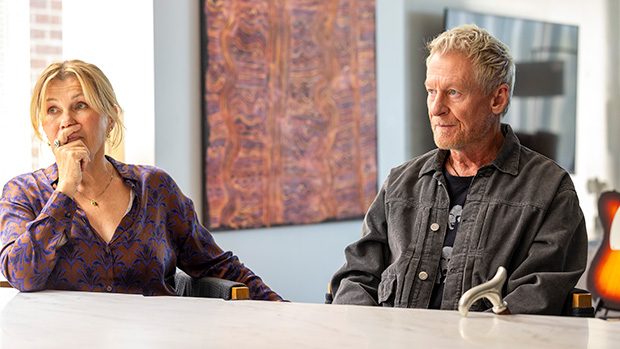
Easy Tiger’s Careless centres on a mysterious backbacker in Sydney
Among the official Australia-UK coproductions Marks pointed to are the Channel 4/Stan four-part psychological thriller Careless and the feature film Prima Facie, both delivered under treaty arrangements. She also highlights other models of collaboration, including the Apple TV+ series Last Seen, made by UK production company 60Forty Films, Aussie outfit Werner Film Productions with Australian writer Kris Mrksa and shot in Melbourne, and two further UK-originated television series currently filming in Western Australia.
What’s on offer to international partners?
For producers weighing up how to structure a project, Marks sets out the layers of support available. The producer offset, she explains, sits at 40% for theatrical feature films and 30% for television and non-theatrical productions, and is available to projects that either pass the significant Australian content test or qualify as an official coproduction. “That’s a very stable incentive,” she says. “It’s been in place for some time.”
Alongside it sits the location offset, aimed at attracting international productions to film in Australia, which Marks says was reformed by the federal government around two years ago and now delivers “a consistent and certain 30% rebate for larger scale productions.” A third, the standalone post, digital and visual effects (PDV) offset, rounds out the package.
“Each of those programmes is mutually exclusive, but they can all be combined with what’s available at different states and territories,” she says.
Infrastructure investment is following the policy reform, according to Marks. Perth Film Studios opened earlier this year and is already housing a UK television series, while the New South Wales government is in the process of seeking a partner to build a second Sydney facility. Queensland has added Spring Queensland Studios in Brisbane and a further presence in Cairns, with plans understood to be in train for a second large purpose-built facility between the Gold Coast and Brisbane.

Apple TV+ series Last Seen from UK production company 60Forty Films
Asked what underpins Australia’s appeal to international partners beyond the financial package, Marks points first to people. “I do believe that first and foremost it’s the people that we have and the experience and the depth of talent,” she says, citing feedback from clients about “our can-do attitude” alongside world-class studios, post-production and visual effects capability, and a quality of life that keeps crews coming back for extended shoots. “I don’t believe that the incentives alone are what makes Australia attractive,” she says. “It’s definitely the full package.”
Tackling the streamer question
In November 2025, the Australian parliament passed landmark legislation enforcing local content investment quotas on major international streaming platforms. Under the new laws, any streaming service with more than one million domestic subscribers – such as Netflix, Disney+ and Amazon Prime Video – is legally required to reinvest in home-grown programming.
These platforms must allocate at least 10% of their total Australian expenditure or 7.5% of their local revenue to producing qualifying Australian content, specifically targeting drama, children’s, documentary, arts and educational genres. Streamers are given a three-year transition window to comply, with non-compliance carrying potential fines of up to 10 times their annual Australian revenue.
Not wanting to be drawn too far on assessing the impact of this new legislation just yet, Marks says: “The obligations came in at the start of this year, and it’s still very early in that process to see the impact. I think it’s something to watch. We will all be watching this.”

Aussie toon Smokedog was selected for the official Annecy competition
Ausfilm’s remit is more focused on the Location and PDV Offsets aimed at attracting larger-budget projects, she adds. Furthermore, newer formats such as the currently hot microdrama genre and burgeoning world of YouTube-native content fall outside that remit too, for now at least.
“It’s not something that sits within Ausfilm’s existing remit, purely because our remit really is to work with the location offset and the PDV offset, which are designed to attract larger-budget projects to Australia,” she says, though she notes the Ausfilm keeps watch on how the industry is evolving and has a voice with government when any policy changes are needed.
On the broader question of government support for the Aussie production community, Marks says Australia is well served by multiple tiers of government backing, and that the location and PDV offsets in particular were “working incredibly well, and really delivering on its policy intent.” She adds: “People are always looking at how they can tweak them to make sure that they maintain their competitiveness.”
Looking beyond Annecy
The London event and the Annecy delegation were connected by timing as much as strategy. Marks says the Annecy trip gave Ausfilm “a national and coordinated face for Australian animation.” The Annecy delegation, Animation Australia, was led by Ausfilm in partnership with Screen NSW, VicScreen, Screen Queensland, Screenwest, the South Australian Film Corporation, Screen Canberra, Screen Tasmania and Screen Australia, and was supported by Austrade’s Accessing New Markets Initiative.
More than 40 companies and animators took part, with three Australian projects selected for official Annecy competition strands last week: Smokedog from Chop Studio in the WTF programme, Oldies of the Coast from Clarence Fennessy in Graduation Films and The World Came Flooding In from Film Camp in Immersive Works. The delegation included studios such as Cosmic Dino, Flying Bark, ILM, Karu-Karu, Kreiworks, MaxFoo, Princess Pictures/Princess Bento and Turbo Chook, working across a slate spanning original IP and service work on major international titles.
Pressed on what success looks like following these initiatives, Marks returns to relationships rather than deal memos. “We know this industry is built on relationships,” she says. “Success really is seeing relationships start to flourish and grow over time. Success is also just seeing that momentum continue, and that enthusiasm of working together.”