As streamers and networks battle it out in the premium true crime space and producers face an ever-higher commissioning bar in an increasingly competitive market, C21 investigates how some are taking matters into their own hands and going direct to the consumer.
On December 3, 2025, Disney+, the streaming arm of the global brand known for its family-friendly storytelling, announced its first UK original true crime commission, The Devil in My DMs, a four-part anthology series produced by London/LA prodco Lightbox Entertainment.
The announcement was made on the same day as Eric Schrier, president of Disney Television Studios and global original television strategy at Disney Entertainment, told delegates at Content London, C21’s international content conference, that Disney’s “failure rate” is low due to its willingness to take risks.
“If failure is not a part of your business model, you’re not going to succeed,” he pronounced.
Arguably, Disney+’s first foray into UK commissioned true crime does not reflect the streamer’s riskiest business decision; fresh data indicates the genre remains one of the most stable programming categories for streamers, networks and broadcasters. And the UK – alongside the US – remains a top market for true crime commissions globally.
According to global entertainment market research company Ampere Analysis, true crime is the key subgenre within documentary content being commissioned worldwide, and in 2025 represented 16% of documentary commissions, slightly up from 15% in 2024.
Tracking first-run titles in 2025 across 22 major media markets by the most significant commissions for TV globally, including renewals, the company found a total of 632 new crime documentary commissions last year, followed by art and culture documentaries in second place at 521 commissions.
“The broad trend is a lot of consistency and stability,” notes Rahul Patel, principal analyst at Ampere, adding: “Crime documentary remains the most common sub-genre among commissioned documentary content.”
Furthermore, Patel reports that the UK and the US remain the key territories globally for first-run true crime commissions, as was the case in 2024. However, he notes that in 2025 the BBC and Paramount’s broadcaster 5 edged ahead as top commissioners of true crime, ahead of Netflix (number one commissioner internationally) and Warner Bros Discovery-owned ID (number one commissioner in US), which came in joint third place.
The thematic focus remained consistent with previous years, with crime documentaries about death and murder accounting for about one-third of all content in the genre, according to the Ampere analysis. Other common themes included drugs-related crime and abuse, each representing about 4-4.5% of content.
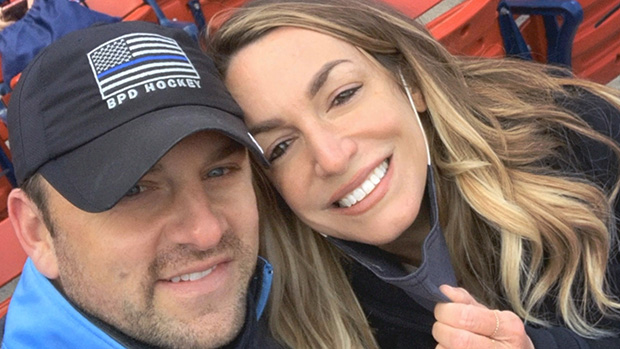
The Trial of Karen Read aired on ID in 2025
No surprise then that the BBC’s most popular crime strands focus on murder; they include award-winning documentary series Murder Case and Murder Trial, both commissioned by BBC Scotland and produced by Firecrest Films. In the first half of 2025, the top three ‘most viewed’ BBC crime documentaries were Murder Trial: Girl in the River, Murder Trial: Body in the Warehouse and Murder Case: The Hunt for Mary McLaughlin’s Killer.
Murder Case returned for a new series in February 2026 with the two-part instalment The Hunt for Arlene Fraser’s Killer, about the investigation into the 1998 disappearance of a mother-of-two from Elgin, Scotland.
“Murder Case is one of our most important brands at BBC Scotland and is hugely popular with the audience. Through its exceptional access to the major investigations team of Police Scotland it has provided the audience with a real insight into the work of detectives on these cases,” said David Harron, commissioning executive, factual at BBC Scotland, about the series.
Murder investigation is also a staple of crime commissioning at 5, where shows such as Murder Suspect No.1 produced a peak audience of 2.1 million across the series and attracted 6.2 million unique views across the five episodes when its first season aired in 2025. A second season of Murder Suspect No.1, which follows eastern England’s Humberside major crime team as they investigate a series of violent crimes, began airing on 5 recently. It is a companion series to Police: Suspect No.1, now in its fifth season on 5. Both are produced by Brinkworth Productions.
Newly announced on the 5 slate is two-part documentary Trial By Jury: The Killing of Claire Leveque, that follows the tragic murder of 24-year-old Canadian Claire Leveque, who was brutally killed by her boyfriend while living on the Shetland Islands. Produced by Big Little Fish, the series gains exclusive access to the Edinburgh High Court trial and the family of the victim.
Guy Davies, consultant editor for commissioning at 5, commented: “This thoughtful series gives a deeply human account of an unimaginable tragedy. It shines a light on the justice process and honours the courage of Claire’s family as they seek truth and remembrance.”
Crime + Investigation, the true crime brand owned by Hearst Networks in the UK, operates as “a boutique model” compared to its terrestrial and streamer “siblings”, according to its newly promoted director of originals and talent, but the exec says the number of hours commissioned for 2026 is “holding steady” compared to 2025. That was a record year for the television channel and streaming service in terms of new hours of “commissioned, coproduced and acquired” programming, according to Hearst Networks.
“We are not commissioning thousands of hours,” says Carter, who describes Crime + Investigation as the home of “stories through people often led by talent or interesting voices thoughtfully chosen”.
Carter estimates the channel has around 26 hours of already commissioned programming for 2026, with space left for “wild cards” and risk-taking.
Alongside Ross Kemp: Lost Boys, Deadly Men, which launched in early March this year, the 2026 slate includes a two-part series, Skegness Psycho: 28 Miles to Murder, produced by FirstLookTV, which aired in February, and upcoming two-parter, Rob Rinder: The Crime I Can’t Forget. The latter focuses on the murder of Lucy Hargreaves in Liverpool in 2005, for which no-one has yet been brought to justice. It is produced by ZigZag Productions and is scheduled to air in June.
ID, the US cablenet credited with setting off the true crime documentary trend two decades ago, is also “fairly consistent” with its output “year on year”, according to Jason Sarlanis, president of TNT, TBS, TruTV, ID & HLN, linear and streaming at Warner Bros Discovery (WBD), noting that “2025 saw tremendous success across both our tentpole documentary events and our long‑running franchises” in true crime. The latter include Homicide Hunter: American Detective with Joe Kenda and ID’s longest running newsmagazine, On the Case with Paula Zahn, both of which kick off with new seasons on April 15.
However, behind this picture of consistency and stability, lies a highly competitive true crime market where the battle is being fought hardest in the premium doc space. While Netflix is largely credited with starting the premium true crime documentary trend over a decade ago, it is players such as Hulu and HBO Max, which have upped the ante. Hulu’s 2025 hit, Devil in the Family: The Fall of Ruby Franke, and HBO Max’s Emmy-award winning The Jinx: The Life and Deaths of Robert Durst, also from last year, are examples of this.
ID has responded with its own ‘docbuster’ strategy, a deliberate pivot away from volume towards programming focused on high-quality, appointment-viewing docuseries, according to Sarlanis. Forming part of this strategy is the newly announced, Boy Band Confidential, described as an “explosive new special” investigating the hidden cost of pop stardom. The series premieres on ID on April 13 and 14.
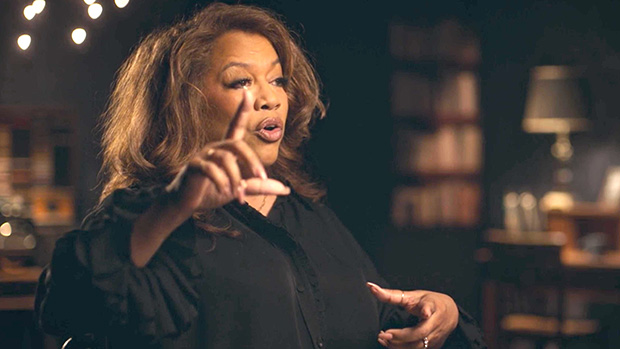
ID ‘docduster’ The Fall of Diddy
“We knew we had to set ourselves apart and we decided to do that by having a more commercial point of view, hence we coined the term ‘docbuster’,” he explains. “This meant bolder, unexpected subject matter that aimed to capture the zeitgeist and an excitement to take risks on filmmakers with unique points of view who weren’t necessarily the industry’s list of usual suspects. That approach has paid off in spades and turned our docbuster slate into an attractive front door to the brand and a huge asset for HBO Max.”
Docbuster titles that aired on ID in 2025 include The Fall of Diddy, The Trial of Karen Read, and Aaron Hernandez & The Untold Murders of Bristol, which Sarlanis describes as “three of our biggest documentary moments of the year, each tapping into major cultural conversations and delivering strong engagement across platforms”.
It remains to be seen how Paramount Skydance’s WBD buyout will impact on the development, production and commissioning strategy of true crime, but Sarlanis is insisting that ID has “some incredible new projects we are rolling out in the docbuster space” in 2026, while “our primary goal is to fuel HBO Max which is aggressively expanding to territories all around the world.”
One of those territories is the UK, where HBO Max debuted on March 26. The launch slate included new true crime doc, Boom Box: Beats and Betrayal, a four-part series about a London recording studio that, while catering to aspiring local rappers, became entangled in a web of illegal gun sales. It is produced by Rogan Productions, better known for award-winning documentaries in genres other than true crime, such as Freddy Mercury: The Final Act and Grenfell: Uncovered. Rogan is producing Boom Box with Armoury, a London-based production company specialising in commercials, brand films, and content creation.
Boom Box marks Rogan’s first commission from HBO Max. Commenting on the project, creative director, James Rogan says: “It is a series that we are very excited about. Essentially it is a very ambitious and creative approach to telling a story about a recording studio from multiple perspectives.”
Similarly, Apple TV, which still commissions only a smattering of true crime documentaries compared to its streaming competitors, turned to Lightbox to produce its latest original, Twisted Yoga, the same producer Disney+ turned to for Devil in My DMs. Lightbox is best known for celebrity-based non-fiction documentaries aimed at the streamer market, including The Princess (HBO), Tina (HBO) and Whitney (Showtime).
Executive producer Suzanne Lavery describes Twisted Yoga, which premiered globally on March 13, as Apple’s first foray into cult-focused content. The three-part series examines a global tantric yoga movement which became the subject of serious criminal allegations against its founder, Gregorian Bivolaru.
Lavery says Apple “put a lot of trust in us to do it in a way that would appeal to Apple’s audience. So, we did go to great pains not to make it salacious, it’s a much more psychological endeavour.”
Netflix, meanwhile, continues to lean into true crime, with two newly announced documentaries, the four-part cult-focused series Trust Me: A False Prophet, produced by Participant and Ark Media, set for release in April, and the feature documentary The Crash, about a fatal car crash in Strongville, Ohio, that ended in murder. The Crash is produced by All3Media-owned prodco Raw (The Puppet Master: Inventing the Ultimate Conman, Don’t F**k with Cats: Hunting an Internet Killer, The Tinder Swindler) and will premiere in May.
Top Netflix titles of 2025 in the genre include Sean Combs: The Reckoning, American Murder: Gabby Petito, and American Manhunt: OJ Simpson, and The Perfect Neighbour, which earned the streamer an Oscar nomination.
Buoyant though the true crime market is, challenges exist, the primary one being standing out in a crowded market, according to Jonathan Ford, managing director of international distributor Sphere Abacus. The company acquires and distributes a diverse slate of true crime content, as well as working with independent producers to facilitate pre-sales and development finance and secure broadcaster commissions.
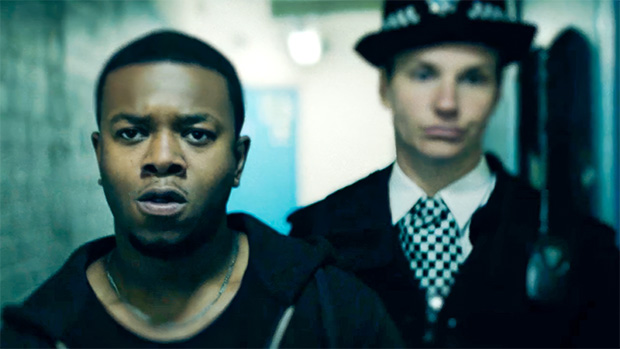
Four-part series Boom Box: Beats and Betrayal for HBO Max
Ford argues that producers need titles or themes that immediately communicate what viewers are getting. This requires clear, descriptive titles that work effectively in TV guides or streaming interfaces. “The Millionaire Murders tells you what that is,” he explains.
Securing new stories with proper access is also important in a crowded market. “There are many stories out there, some of them being told a number of times”. The key is finding stories that are contemporary and ensuring access to new information or perspectives that haven’t been told before, he says.
A&E’s new series Crime in Progress, produced in-house at the US cablenet by A+E Factual Studios, is a case in point. The two season order, which began airing on January 1 2026, follows investigations in real time, using body cam, dash cam and surveillance footage.
Elaine Frontain Bryant, executive vice president and head of programming at A&E and Lifetime, describes Crime in Progress as “a 360 degree look at the whole criminal justice system”. “It’s messy, but its OK that’s its messy. It feels very real,” says the exec, who describes A&E’s storytelling approach as “visceral” and its market position as deliberately non-competitive with premium streamers and networks. “We are filling a niche that not everybody else does,” she explains.
Another recent true crime order by the network that launched The First 48 Hours, one of the longest-running true crime series, is 10-episode series, Predator Hunters, which follows Detective Tony Godwin. The veteran investigator opens his case files for the first time for this series which shows the North Texas-based Internet Crimes Against Children (ICAC) Task Force’s pursuit of online child predators. The new series, which began airing on A&E on March 5, is produced by Louis Theroux’s UK indie, Mindhouse, and Soho Studios.
Arron Fellows, executive producer for Mindhouse on Predator Hunters, says that the opportunities within true crime are currently strong. “We range quite widely in the types of programmes that we make, but consistently true crime and celebrity are the two areas which it feels like lots of people are looking for,” he notes, adding that the company is currently working on a project for a global streamer “which falls within true crime”, and is pitching projects in the true crime space via its agents at CAA, “for which there’s interest in at the moment”.
While producers and distributors are reporting a strong market for true crime, there’s evidence that commissioners are dialling back on their orders following a glut of true crime commissioning, according to Kate Beal, CEO of Woodcut Media. “The frenzy of true crime commissioning has matured, it’s not just ‘let’s get as much as we can’,” she observes.
Beal explains that commissioners have realised they’re scheduled up until 2027-28. “Two years ago, if you looked at the Woodcut order book, we had, say, 12 productions in production at any one time, and at least nine of them were true crime. At the moment, we’ve got eight shows in production and three are true crime. That’s not necessarily negative, it’s just it’s coming back to a balance, which is a good thing, I think.”
Furthermore, there is concern among some producers that a trend that sees the commissioning bar forever being raised is putting a strain on the development process both financially and, in some cases, on the victims of true crime and their families.
“The hoops that you have to jump through to get the commissions have multiplied, and the time it seems to take to make decisions has multiplied as well,” says Brian Woods, director and executive producer at True Vision, which produced true crime series Bibaa & Nicole: Murder in the Park, for Sky Docs last year. He contrasts this with how things used to work: “Long gone are the days when you could speak to a commissioner about an idea and they’d go, ‘yeah, that’s great. I’ll speak to the controller’. And ‘yeah, we want to do it’.”
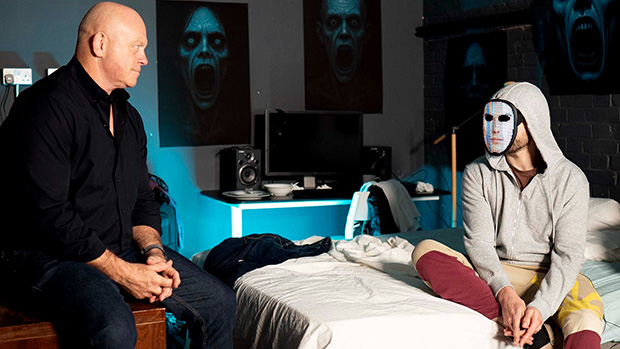
Ross Kemp: Lost Boys, Deadly Men launched in early March
John Farrar, founder of Leeds-based true crime start-up Homecoming Studios (Heist: Robbing the Bank of England with Marcel Theroux), says he has secured investment funding from Rosegown Investments, a start-up investor for this very reason. “The bar just gets higher,” he says, noting that producers are having to take on much more development risk upfront.
“Now when I’m pitching, I’ve got all the access already in place, I’ve got the sizzle reel that demonstrates the mood and feel. I may have a director attached, and I may also have done a budget and schedule completed, the idea being that if somebody wants to buy the idea they can leapfrog over the lengthy development process,” he explains.
But the extended development process creates particular ethical challenges when working with vulnerable subjects, according to Fellows: “Where it becomes tricky in the world of crime is when you’re approaching people for access to these crime stories, you’ve got to remember at the very least the people you’re talking to are vulnerable. They might be bereaved, they’re in incredibly sensitive circumstances.”
The core problem is that “we’ve been asked to basically keep people on board with a potential documentary for longer and longer before commissions are given with obviously no guarantee that that commission is going to happen.”
For some producers, it makes sense to diversify their businesses to combat these challenges and take advantage of new opportunities.
Woodcut has spent the last 12 months strengthening its direct-to-consumer strategy with the development of two YouTube channels, True Crime Uncut and Underworld Uncut.
“We’ve done this very organically,” explains Beal. “We are not paying for ads, we’re not doing any circumnavigating of the system”, but she says the results are encouraging especially for Underworld Uncut, which has a growing audience among the older generation. “They’re not watching shorts, they’re watching 50-minute docs,” she says.
Currently, Woodcut is producing three original shows per week for each YouTube channel and though it is not making any money back on its investment yet, Beal sees this as building toward future monetisation: “I think within two to three years it’ll be absolutely holding its own financially. And we at Woodcut see this as very much not replacing commissioning, but as going alongside it.”
Slowly but surely, true crime is leaving a digital imprint, though it remains to be seen whether it will crack the case of financial viability.