
As the vertical video format spreads further around the globe, a number of new platforms are attempting to redefine what a microdrama is and elevate it from its low-cost roots.
A handful of microdrama executives interviewed by C21 in recent weeks are united by a single ambition: to redefine the genre. Where they diverge sharply is on what that redefinition should look like, revealing a sector that has outgrown its own name almost as quickly as it emerged.
For Ana Prieto, founder of Spanish platform Dramyx, the fix lies in decoupling microdrama from melodrama. “We believe that microdrama is a format, not a genre,” she tells C21’s Spanish-language sister publication Cveintiuno, arguing that mystery, thriller, romantic comedy, action and drama can all coexist within the format “provided they retain the elements that make microdrama so appealing: a very fast pace, short episodes, constant twists, cliffhangers and characters capable of forging an immediate connection with the viewer.”
Her ambition is explicitly European. “Europe has a great opportunity to develop its own microdrama model, with a creative identity, high production standards and a narrative capable of connecting with international audiences,” she says. Her production company Anafilms wants “to be part of that evolution from the outset and help consolidate a microdrama industry with a European stamp and premium quality, because telling stories in a vertical format does not have to mean low technical or artistic quality.”
Dramyx launched with mystery drama Los Secretos de Montesierra, which drew a crowd of 500 to a screening at Madrid’s Capitol Cinema before moving to the app. Two further originals, the romantic thriller Cruise of Betrayal and the mystery drama Cryogenics: The Rich Die Too, followed. Prieto positions the platform less as a distribution app than a “narrative lab” bridging traditional television and digital consumption, explicitly citing China’s microdrama boom as a reference point.
Monetisation, however, remains a work in progress; Dramyx is currently free worldwide while the company assesses its options. “Our aim is to build a sustainable platform that combines different monetisation channels, always putting the viewer at the centre. We are analysing different models,” Prieto says, adding that Dramyx is open to collaboration with other platforms and third-party producers, “provided it fits with Dramyx’s editorial line.”
RoseBerry Media goes further, dropping the word microdrama altogether. When its Epis app launched last month with more than 100 titles, the term was, in the New York-based company’s words, “conspicuously absent” from the announcement. Co-founder and CEO Guy Hameiri frames the company’s ambitions in terms of television history rather than the current vertical boom. “TV started in the 1940s with soap operas in the US but evolved into what we see as TV today,” he says. “We believe that this is just the beginning of a much bigger evolution.”

Dramyx’s mystery drama Los Secretos de Montesierra
RoseBerry, he insists, is “in a different field. We’re playing a different game,” describing the business as “not just an app” but “a full start-to-end studio for vertical television.” Co-founder Lior Friedman, who previously worked in FAST channel distribution through Amagi, says the studio’s job is to “create IP and our job is to monetise that IP across what we see as a growing landscape of users that want to consume content on their mobile devices.”
Epis’s launch slate spans premium scripted, true crime and dating reality, including titles licensed from A+E Global Media, All3Media International, Banijay Rights, Cineflix Rights and Fremantle. Sexy Beasts, a repurposed BBC Three dating format, is currently the platform’s best performer, with Friedman noting the team has taken the UK version and “adapted it by adding different elements that are making it more palatable to a vertical US audience.”
Early engagement is strong, he says, with some subscribers “spending more than 60 minutes per session,” and “more than 50% of users converting on the paywall” for top titles. That distinction matters commercially too. Friedman says RoseBerry is deliberately avoiding the “one-night stand” of aggressive user acquisition common elsewhere in the sector, in favour of building “a long-standing relationship” with subscribers through what Hameiri calls less “aggressive” pricing than the weekly and monthly rates typical of microdrama apps. RoseBerry has also built its own AI repurposing tool, Redsnapper, which the company says makes the process “between 80% and 90% automated.”
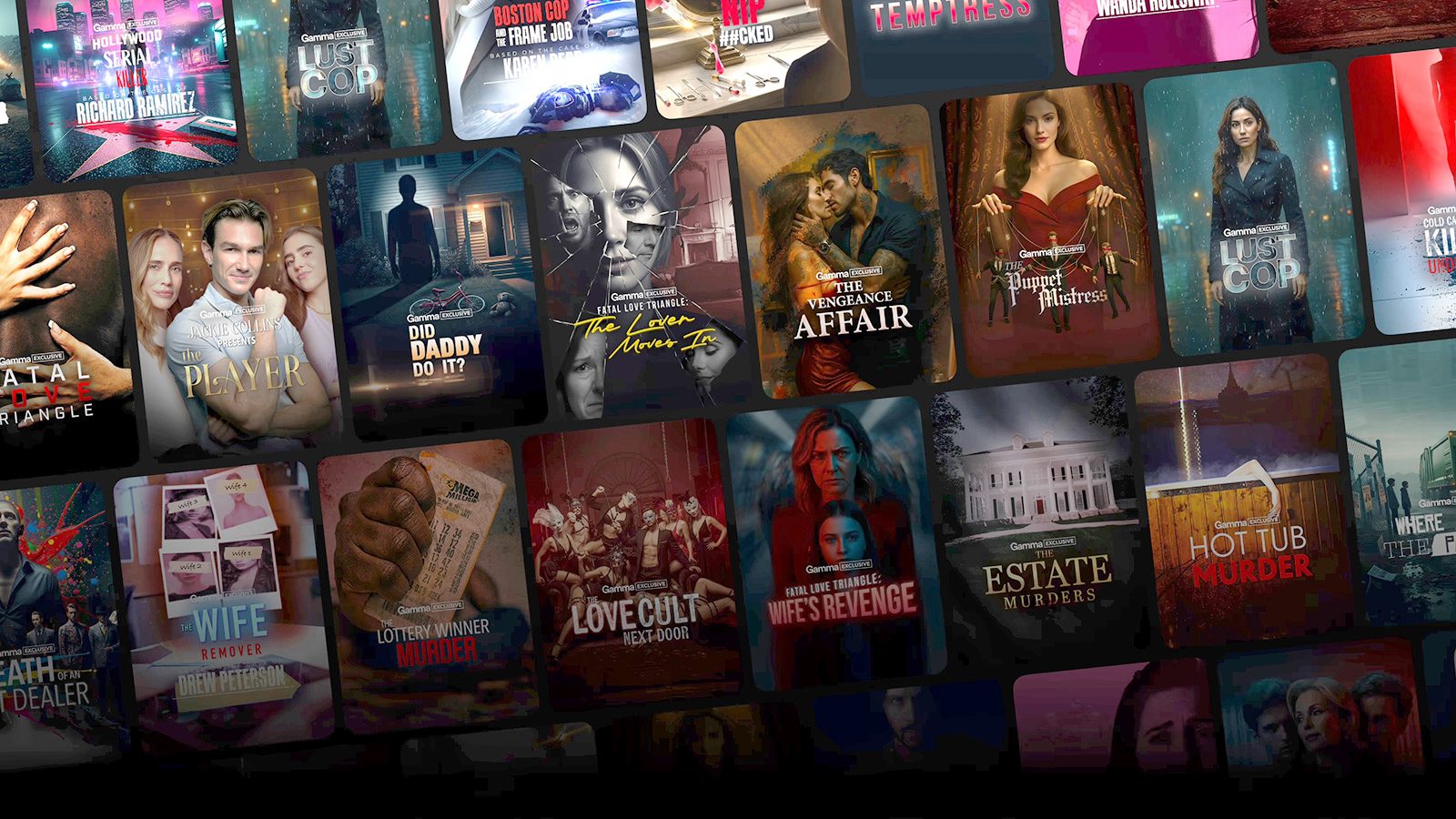
At another new US platform, GammaTime chief business officer Alex Montalvo is redefining microdrama from the inside, by pulling Hollywood’s legacy IP into the format rather than distancing his platform from the microdrama label. Fresh off a Series A round backed by Versant Media Group, the media company spun off from Comcast, Montalvo says GammaTime is “pushing forward aggressively” and wants to become “the most trusted, most viewed and most visited habitual platform in the microdrama space.”
Central to that is persuading studios that microdrama is a legitimate new window for their catalogues. “We have the ability to partner with different studios around town to find unique ways to give their amazing content a new window,” he says, adding that “there’s a lot of conversations happening with a bunch of the other players about bringing new titles to our platform.”
He cites GammaTime’s reformat of Forensic Files, achieved through a partnership with AI reformatting specialist Spikes Studio, and its gossip show National Enquirer Uncovered as evidence of a “breakthrough format in how you can take your legacy IP and adapt it to our format.” He sees “a big future with legacy studios and studio IP in migrating them over to the microdrama format.”
GammaTime’s content is otherwise split between romance titles aimed at women aged 30 to 60, including The Summer I Turned My Sexiest and Hot Priest, and true-crime originals such as Death of an Art Dealer and Hot Tub Murder. Montalvo says the company is “focused less on genres and more on audiences” that remain underserved, including African American, Latin American and faith-based viewers, and is using Vault AI for what he calls “predictive greenlighting,” identifying “audience segments that are overlapping with our real-time data right now.”
As to whether the industry should treat GammaTime as a traditional content buyer, Montalvo is cautious: “You can think about us as a producing partner. But the great thing about verticals is it’s like the Wild West in terms of dealmaking and partnership arrangements. So as we grow, we’ll explore other arrangements that we haven’t looked at thus far.”

The adaptation of Alfred Hitchcock film The Lodger raised eyebrows
Tommy Harper, the Hollywood producer behind another US platform, VeYou, wants to redefine microdrama upward, positioning his platform as “the HBO version in the vertical space” in reaction to what he sees as a flood of low-quality, AI-generated content elsewhere. “We want it to be different to all the other platforms out there. You look at the tiles and they all look the same,” he says.
That ambition extends to content standards as much as production values: “We are not going to make anything that is abusing women or drugging women. We want to make things that your 16-year-old can watch and a 60-year-old can watch.” Harper, whose credits include Top Gun: Maverick and Star Wars: The Force Awakens, says VeYou will target the staple genres of romance, action and thriller but “of a higher quality than most current output,” pointing to screenwriter Garry Marshall as a stylistic reference for romcoms and Scream rather than Saw for “light” horror.
VeYou’s flagship title Love Under Fire and its acquisition of the Elon Musk biopic Elon reflect a strategy built on curation rather than volume. Budgets range from US$100,000 to US$250,000 per series, using “AI-powered” visual effects for elements such as explosions to deliver what Harper calls a “cinematic feel,” though he is careful to draw a line under how far that goes. “We’re not going to double the budgets, because then the business model just doesn’t work. We have to be savvy with how we do these to survive.”
Unusually for the sector, VeYou lets viewers buy an entire series outright, at US$4.99 for licensed titles and US$10.99 for originals, rather than relying solely on micropayments. Harper also frames microdrama as an opportunity for young talent shut out of a struggling traditional industry. “If you’re a filmmaker, go make your own vertical and reach out to us. You can go make your own film, shoot it, edit it and release it for a fraction of the cost, make some money and have a career.”
UK platform Tattle TV, meanwhile, is taking yet another route, redefining microdrama through archive repurposing rather than originals alone. Co-founder Marina Elderton has reworked Alfred Hitchcock’s The Lodger and Charlie Chaplin’s The Kid for vertical viewing, drawing scepticism from within the sector. “They were telling us it’s not going to work. But for us, we are cinephiles, so why not?” she says.
Elderton frames the mission in national terms as much as creative ones. “There’s no British platform. Britain should be leading this, not just catching up. We’re very much behind – even France is ahead of us.” She argues quality is Tattle TV’s differentiator. “We’re going to bring a cinematic edge to the microdramas. I don’t see why we can’t apply that model to vertical viewership,” she says.
Tattle TV runs a coin-based system designed to be “psychologically low-commitment,” starting at £1.99 for 1,000 coins – considerably cheaper than rivals such as Vigloo. “We are cheaper because we just don’t have enough content right now,” Elderton admits, prioritising “a really satisfying, enjoyable experience” for users while the catalogue builds.

Marina Elderton
Rights clearance remains the platform’s central obstacle, addressed in part by becoming one of the first vertical apps to introduce geo-restrictions. “We’d love to be able to open that up more eventually. But that’s how we can facilitate this.” She adds that Tattle TV has been “actively shaping this conversation because we distribute content as well.”
Tattle TV favours coproductions over acquisitions, since, in Elderton’s view, “buying a finished microdrama can cost as much as producing one in-house,” while copro deals let the platform “retain evergreen IP and offer producers equity and revenue share.”
The five approaches also split over AI, a technology every platform uses but frames differently. GammaTime leans on Vault AI for greenlighting decisions, while RoseBerry’s Redsnapper automates most of its repurposing pipeline. Tattle TV uses AI to rebuild archive footage for vertical framing and to rework the score for The Kid, but Elderton is wary of AI-generated originals. “I don’t necessarily feel it aligns with our brand right now,” she says. Harper is the most pointed critic, citing AI-driven sexualised content as a problem VeYou was built to counter, even as it uses AI for visual effects to keep costs down.

VeYou’s biopic acquisition Elon
Despite their different definitions of what microdrama should become, the five executives agree on the sector’s underlying fragility. Elderton points to Omdia’s forecast that the vertical content market will reach US$14bn in global revenues by the end of the year, but warns the industry needs “a proof point, where we can show the audience appetite for it,” at what she calls “a very tentative moment” where “everyone is circling, everyone is interested in what’s happening.”
She cites Fox’s decision to reformat primetime reality show Farmer Wants a Wife for Holywater’s MyDrama app as encouraging, “because that’s going to be one of the bigger platforms showing repurposed content.” User acquisition and churn, driven by so-called binge-and-exit behaviour, remain the sector’s costliest and most persistent problem, a challenge India’s Pocket FM cited last month when it closed its Pocket TV app, saying the business model “doesn’t work.” Media analyst Evan Shapiro has been blunter still, describing microdrama as “a ponzi scheme.”
How Dramyx, RoseBerry, GammaTime, VeYou and Tattle TV each choose to answer that challenge, while pulling the definition of microdrama in five different directions, is likely to shape which of them are still standing when the format settles into whatever it eventually becomes.