Natalie Adams on Triggerfish's UK expansion
By Karolina Kaminska 08/04/2026
Natalie Adams, senior VP of business development at Triggerfish, discusses the strategy behind the South African animation studio’s recently launched UK arm.
Triggerfish already has an established base in Ireland; why did it decide to open an office in the UK too?
Ireland has been a strong foundation for our European work, but expanding into the UK is about deepening our connection to one of the world’s most creative talent pools. It also brings us closer to key clients, collaborators and commissioners, and reinforces our position as a destination studio for premium animation, with access to more options for funding incentives. At the same time, this isn’t about replicating a traditional studio model. We’re building something more flexible that connects our teams across Cape Town, Galway and now Bristol through a shared, cloud-based pipeline. It allows us to scale around projects and talent, while maintaining the level of quality and craft we’re known for.
Why did the company identify Bristol as a good place to base the UK office?
Bristol felt like a natural fit. It has a rich storytelling heritage, a globally recognised animation community and the energy of a city that genuinely values creative work. Its UNESCO City of Film recognition is just one reflection of that legacy. Practically speaking, its proximity to London keeps us close to clients and partners, while the city itself is buzzing with animation talent. Our new space in the Royal Talbot Buildings gives us a home for creative development, screenings and collaboration, all while supporting a remote-first approach that keeps us nimble and connected.
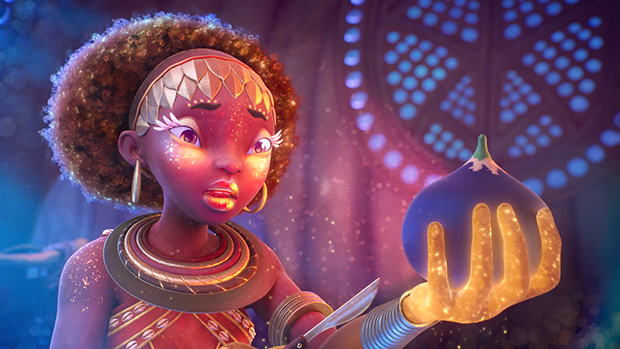
Kizazi Moto: Generation Fire, an example of distinctive, auteur-driven storytelling
Tell us about your role at Triggerfish and how you’ll be leading the UK arm.
As senior VP of business development, I’m spearheading our UK expansion, building on the strong reputation we’ve established across South Africa and Ireland. We pride ourselves on delivering premium CG animation at scale, with the reliability, flexibility and technical excellence that top-tier clients expect. A big part of my role is embedding the UK into our global production model and deepening relationships with broadcasters, streamers and producers to grow our service offering. At the heart of that is our cloud-based pipeline, which allows seamless collaboration across locations. The UK hub plugs directly into this model: a place where ideas are developed, partnerships nurtured and ambitious projects delivered at the highest level, without being constrained by geography.
What projects are on Triggerfish’s current slate?
We’re continuing to work across a healthy mix of original IP and high-end commissioned projects, and we see those two sides of the business as genuinely symbiotic. Our service work with top-tier partners helps us continually refine our craft and pipeline, while creating the space to develop and champion bold, creator-led ideas of our own. Projects like Kizazi Moto: Generation Fire are a great example of that – distinctive, auteur-driven storytelling made possible by the same level of technical excellence and production rigour we bring to our client work. Alongside that, we’re proud of our long-standing collaboration with Magic Light Pictures on the BBC One Christmas specials based on the books by Julia Donaldson and Axel Scheffler. Films like Stick Man, Zog, The Snail & the Whale, Tiddler and The Scarecrows’ Wedding are projects that connect with broad audiences and reflect the level of craft and storytelling we’re renowned for.
How is Triggerfish navigating a difficult market for kids’ content and animation, amid declining commissions and as young viewers flock to YouTube?
There’s no question the market is shifting, with platforms like YouTube and Roblox changing how young audiences engage with content. But rather than seeing that as a limitation, we view it as an opportunity. Our focus is on staying nimble by building IP that can travel across platforms, while doubling down on quality and originality. Broadcasters and streamers still need standout shows, and that’s where we thrive: combining strong creative voices with a production pipeline that can cost-effectively deliver high quality at scale. By focusing on premium content, we keep ourselves constantly relevant and far more immune to the industry turmoil. Our high-quality low-cost studio in South Africa gives us a unique advantage. As the markets struggle financially, we’re rigorous about keeping our budgets in line with the market so that we can get maximum efficiency through cost saving enabled by technology, talent distribution and rigorous production discipline.
What are the other big challenges currently affecting the animation industry?
The pressure points are clear – a contracting market, tighter budgets, longer commissioning cycles and ever-rising expectations around quality. Meeting those challenges demands a different kind of studio model. For us, that means investing in technology and workflows that make us more efficient and scalable, while continuing to nurture strong creative networks. We structure production to take advantage of cost efficiencies across territories, including competitive tax rebates, so we can offer clients real value without compromising on quality. It’s about doing more with less infrastructure by staying flexible, smart and globally connected while still delivering ambitious work at the highest level.
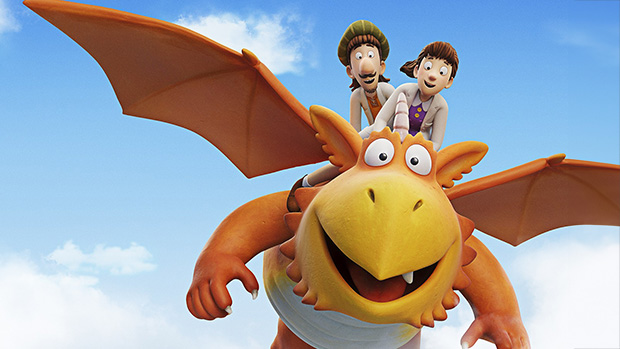
Magic Light’s animated special of Zog
Tell us about Triggerfish’s partnership with the BBC on its Ignite programme.
We’re genuinely excited to be working with BBC Ignite. The programme aligns perfectly with our focus on creator-led storytelling and it’s fantastic to be part of discovering and nurturing the next generation of UK animation talent. As a production partner, we’re hands-on with emerging creators, helping them take their ideas to the next stage and shaping projects that could define the future of British animation. For us, it’s about investing in the creativity, talent and stories that will drive the industry forward. Being able to do that out of our new UK hub makes it even more exciting.
Where do you see the biggest opportunities for animation in 2026?
The biggest opportunities lie at the intersection of creative distinctiveness and production flexibility. Audiences are global, platforms are evolving and there’s an appetite for premium, authored content that really stands out. Embracing change through new technologies, coproductions and innovative workflows allows studios to collaborate across borders and scale projects in ways that weren’t possible before. Studios that can operate across territories, deliver efficiently and support strong creative voices are in a powerful position. Technology is reshaping the industry and those who embrace it thoughtfully will be best placed to create sustainable, future-ready animation.
What can we expect to see from Triggerfish over the next couple of years?
We’ve built a studio for the new era: cloud-based, distributed across creative hubs and designed to scale around great ideas. Our Bristol base will act as a hub for development and collaboration, complementing our teams in Cape Town and Galway. You can expect more ambitious, creator-led projects, continued partnerships with top-tier clients – particularly on well-loved, established IP where brand integrity is crucial – and ongoing investment in both talent and technology, including AI exploration. Ultimately, it’s about delivering world-class animation in a way that’s more connected, more flexible and more responsive to where the industry is heading.